The best gazebo roof depends on your climate first and your style second. Asphalt shingles, metal panels, and polycarbonate sheets are the three options that consistently deliver on both durability and good looks across most backyard setups.
A gazebo roof does more work than most people give it credit for. It handles rain, wind, UV exposure, and in colder climates, snow load, all while being the most visible design element of the entire structure.
This list covers 15 roof ideas that have been chosen because they genuinely perform over time and not just because they look good in photos. For each one you will find what makes it worth considering, what climate or style it suits best, and what to watch out for before committing.
1. Asphalt Shingles
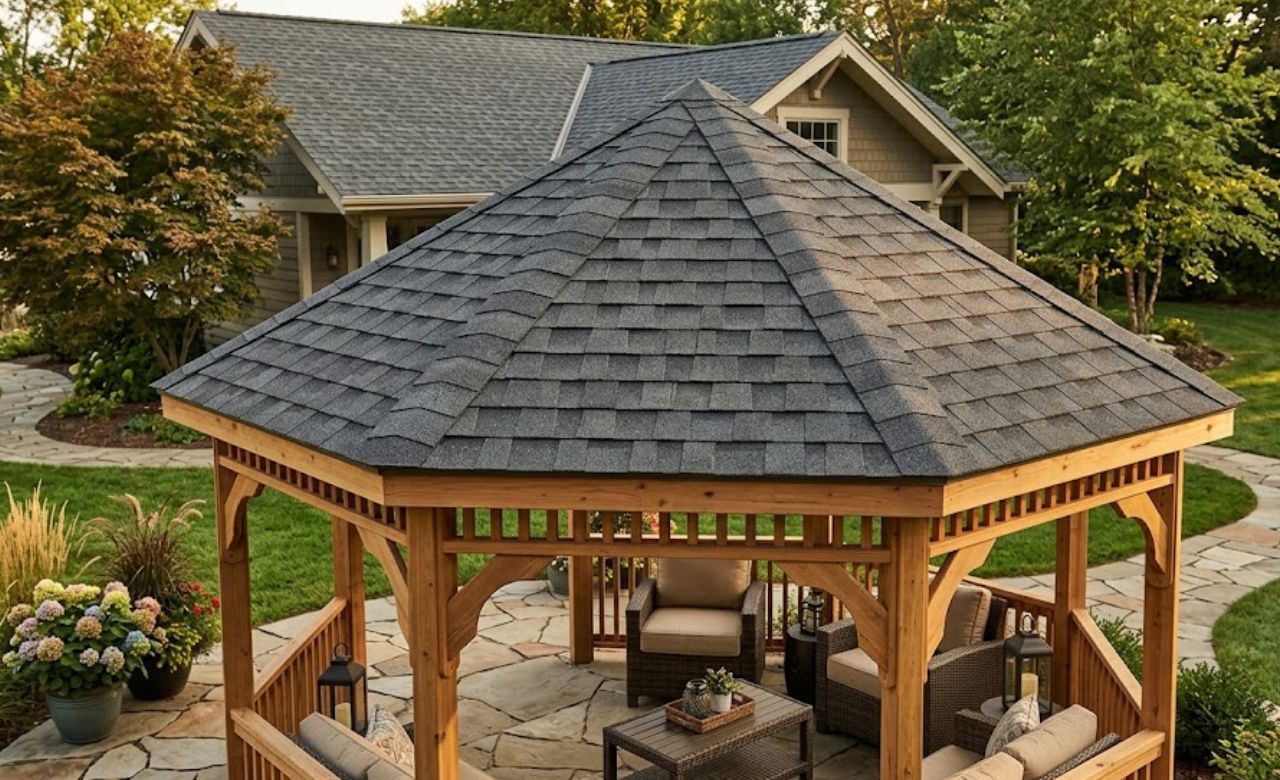
Asphalt shingles are the most widely used gazebo roofing material for good reason. They are affordable, available everywhere, easy to install without specialist skills, and they match the roofline of most homes without any visual conflict.
A standard three-tab shingle handles rain and moderate wind well and comes in enough color options to suit almost any backyard aesthetic. Architectural shingles cost a little more but add a dimensional texture that looks noticeably better up close and holds up longer in areas with temperature extremes.
Why Asphalt Shingles Work So Well
- Most affordable roofing option available
- Easy DIY installation for beginners
- Available in dozens of colors and profiles
- 20 to 30 year lifespan with minimal maintenance
- Matches existing home roofing for a cohesive look
2. Metal Roofing Panels
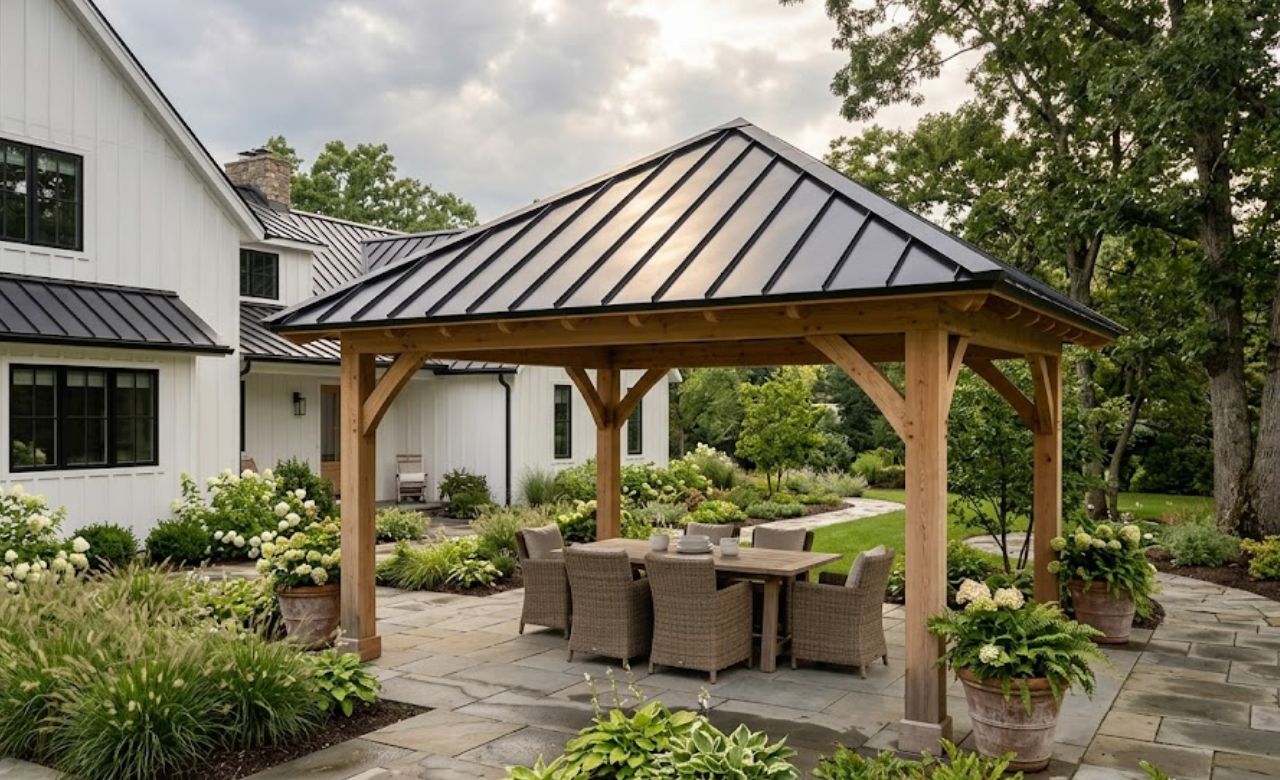
Metal roofing panels have moved well beyond the industrial look they used to carry. Standing seam steel and corrugated metal panels now come in a wide range of colors and profiles that suit everything from modern farmhouse styles to contemporary minimalist gazebos.
Metal sheds water faster than almost any other roofing material and handles heavy snow load without sagging or cracking. It is also one of the longest-lasting options available with a lifespan of 40 to 70 years when properly installed and maintained.
Metal Roofing Advantages Worth Knowing
- 40 to 70 year lifespan far exceeds most alternatives
- Sheds rain and snow faster than any other material
- Available in standing seam or corrugated profiles
- Comes in a wide range of powder-coated colors
- Recyclable at end of life for a sustainable choice
3. Cedar Shake Shingles
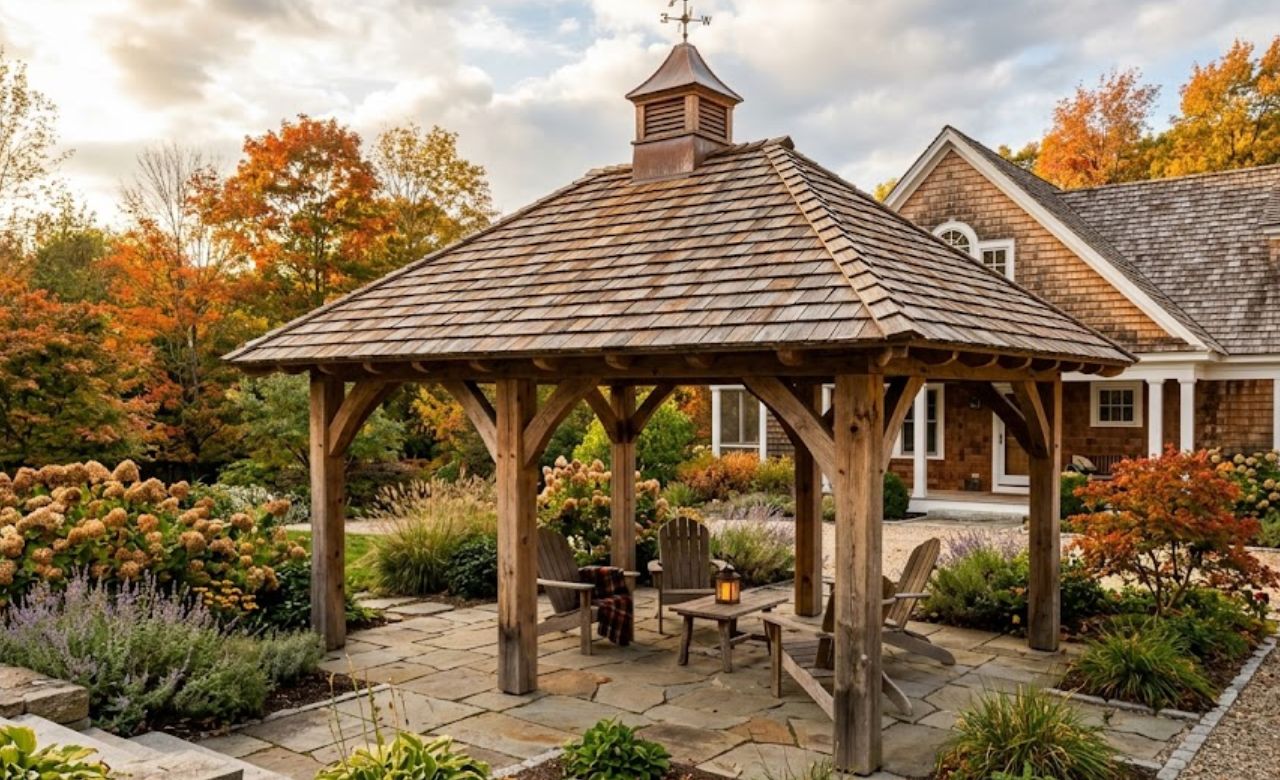
Cedar shake shingles bring a natural, textured character to a gazebo roof that no manufactured material fully replicates. The irregular surface and warm wood tones age gracefully over time, shifting from golden brown to a silvery grey patina that looks genuinely beautiful in garden settings.
Cedar contains natural oils that resist moisture, insects, and rot without chemical treatment. A cedar shake roof on a well-built gazebo can last 30 years or more with occasional cleaning and a reapplication of wood preservative every five to seven years.
Cedar Shake Suits These Gazebo Styles Best
- Traditional or cottage garden gazebos
- Rustic and woodland backyard settings
- New England and Pacific Northwest aesthetics
- Gazebos with natural wood post and beam frames
- Properties with existing cedar or wood shake home roofing
4. Polycarbonate Roof Panels
Polycarbonate panels are the right call when you want rain protection without losing natural light inside the gazebo. The material transmits up to 90 percent of daylight while blocking the majority of UV radiation, which means the space stays bright without the heat buildup or sunburn risk of sitting under clear glass.
Twin-wall polycarbonate is the grade worth buying for a gazebo roof. The double layer provides meaningful insulation value and structural rigidity that single-sheet polycarbonate simply cannot match. It also handles hail and wind loading far better than glass at a fraction of the weight.
Polycarbonate Panel Specs to Look For
- Twin-wall construction for rigidity and insulation
- UV protective coating on the outer surface
- Minimum 8mm thickness for gazebo roof applications
- Opaque white or bronze tint to reduce heat buildup
- Aluminum framing channels for clean edge finishing
5. Thatch Roofing
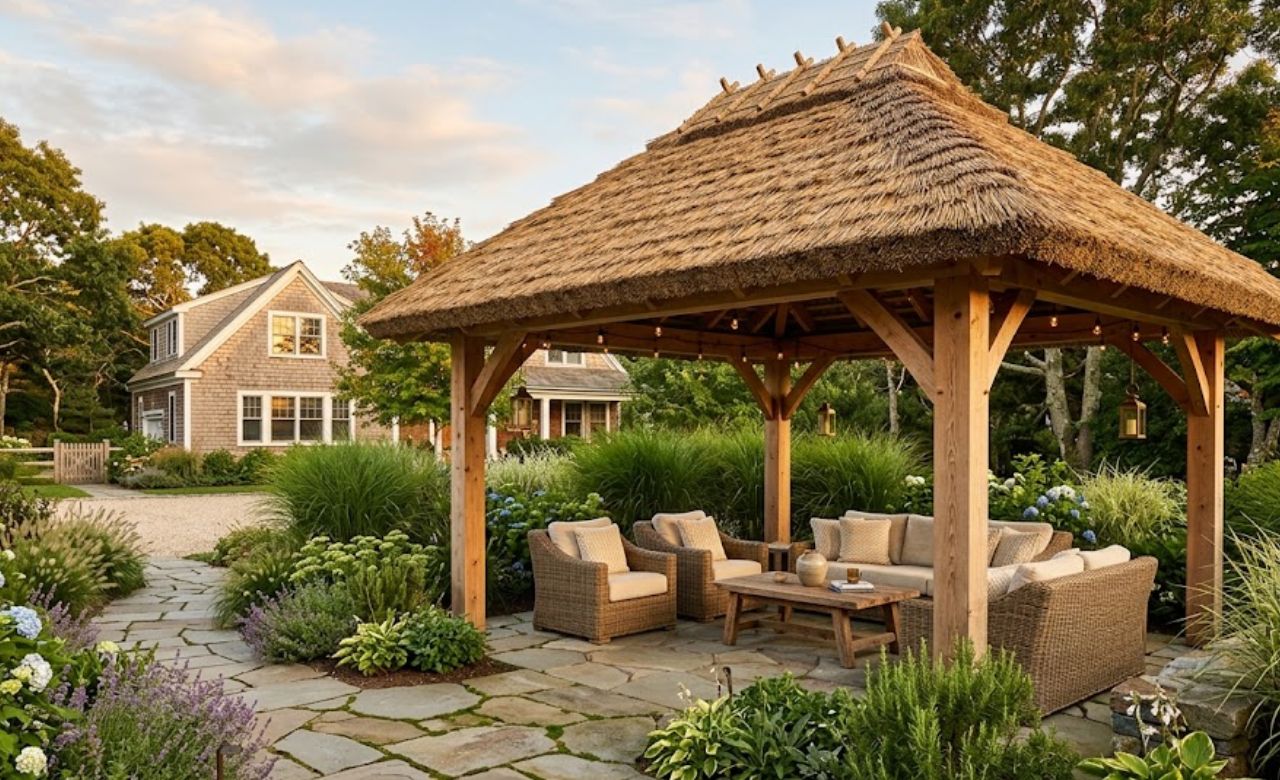
A thatch roof transforms a basic gazebo into something that looks like it belongs in a tropical resort. The layered natural grass or palm frond surface has a depth and warmth that no manufactured material comes close to matching visually.
Modern synthetic thatch has largely replaced natural thatch for backyard applications because it handles UV exposure and moisture without the decomposition and pest issues that natural materials develop over time. Quality synthetic thatch carries a 15 to 20 year lifespan and passes fire safety standards that natural thatch cannot meet in most jurisdictions.
Thatch Roofing at a Glance
- Natural thatch: most authentic look, requires replacement every 5 to 10 years
- Synthetic thatch: 15 to 20 year lifespan, fire rated, UV stable
- Best suited to tropical, coastal, and resort-style backyard designs
- Works best on steeply pitched roof frames for proper water runoff
- Pairs naturally with bamboo, rattan, and open-sided gazebo frames
6. Corrugated Fiberglass Panels
Corrugated fiberglass panels offer a middle ground between the full opacity of metal and the clarity of polycarbonate. They let diffused light through while providing solid rain protection and they cost less than polycarbonate twin-wall panels at comparable thicknesses.
The translucent quality of fiberglass panels creates a soft, even light inside the gazebo that is comfortable to sit under even in strong midday sun. Colored options in green, smoke, and bronze tint the light in ways that add a subtle atmospheric quality to the space below.
Fiberglass Panel Options by Tint
- Clear: maximum light transmission, highest heat gain
- White opaque: soft diffused light, good heat reduction
- Green tint: classic greenhouse feel, reduces glare
- Bronze tint: warm amber light, strong UV reduction
- Smoke grey: modern look, minimal glare and heat
7. Copper Roofing
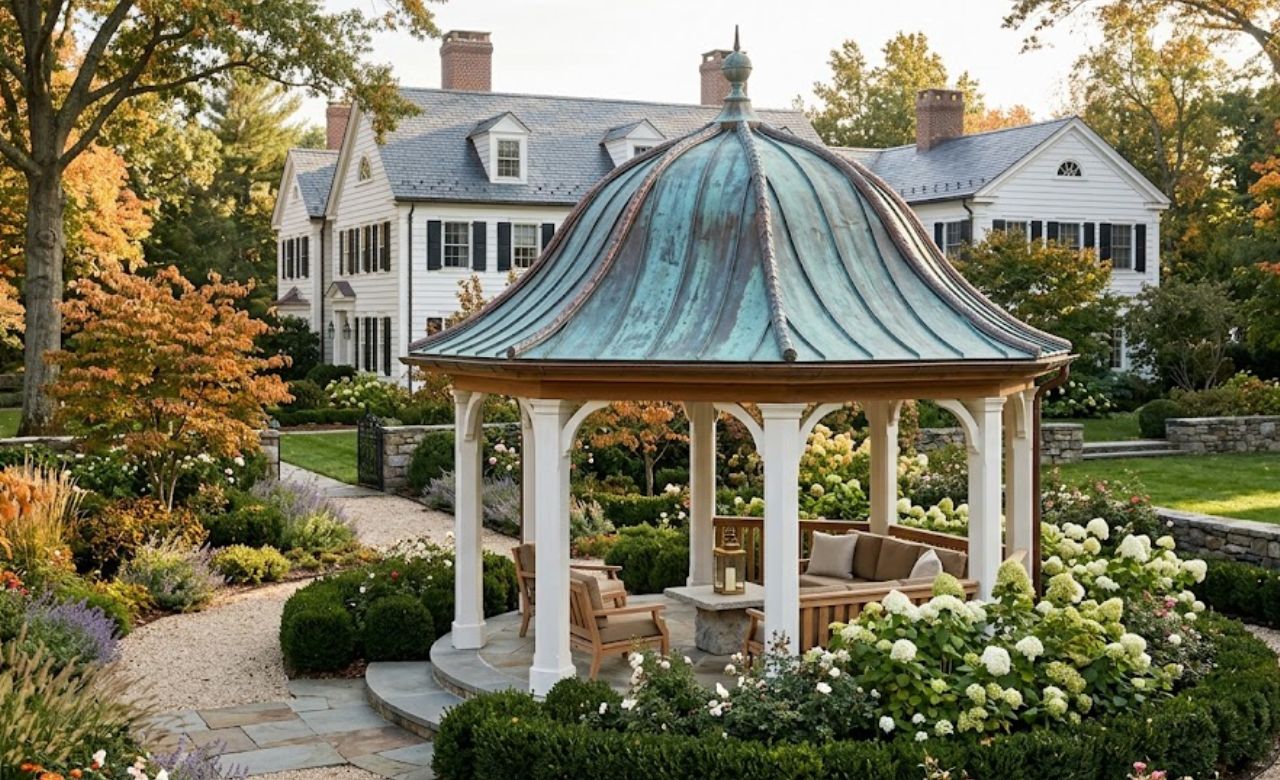
Copper roofing is the premium choice that announces itself immediately. Fresh copper starts as a warm reddish-brown and gradually weathers through a series of tones before settling into the iconic blue-green patina that looks genuinely stunning on a well-designed garden gazebo.
The patina process takes anywhere from five to twenty years depending on your local climate and air quality. In coastal areas with salt air it develops faster. The end result is a roof that looks like it has been part of the landscape for generations and requires virtually no maintenance once the patina is established.
What to Know Before Choosing Copper Roofing
- Highest upfront cost of any gazebo roofing material
- Develops a blue-green patina over 5 to 20 years
- Lifespan of 50 to 100 years with no active maintenance
- Cannot be in contact with aluminum or steel fasteners without galvanic corrosion
- Suits formal, classical, and high-end garden design styles
8. Clay or Concrete Tiles
Clay and concrete tiles bring a Mediterranean or Spanish colonial character to a gazebo that works beautifully in the right setting. The weight and thermal mass of tile roofing keeps the interior noticeably cooler on hot days because the tiles absorb heat rather than transmitting it directly into the space below.
Tile roofing requires a structurally robust frame because the material is significantly heavier than shingles or metal panels. Factor this into the design of your gazebo posts and beams before committing to tile since an undersized frame will not handle the load safely.
Tile Roofing Suits These Settings Best
- Mediterranean, Spanish, or Tuscan backyard styles
- Warm dry climates with low freeze-thaw activity
- Gazebos with heavy timber or masonry construction
- Properties with existing tile roofing on the home
- Formal garden designs with symmetrical layouts
9. Slate Roofing
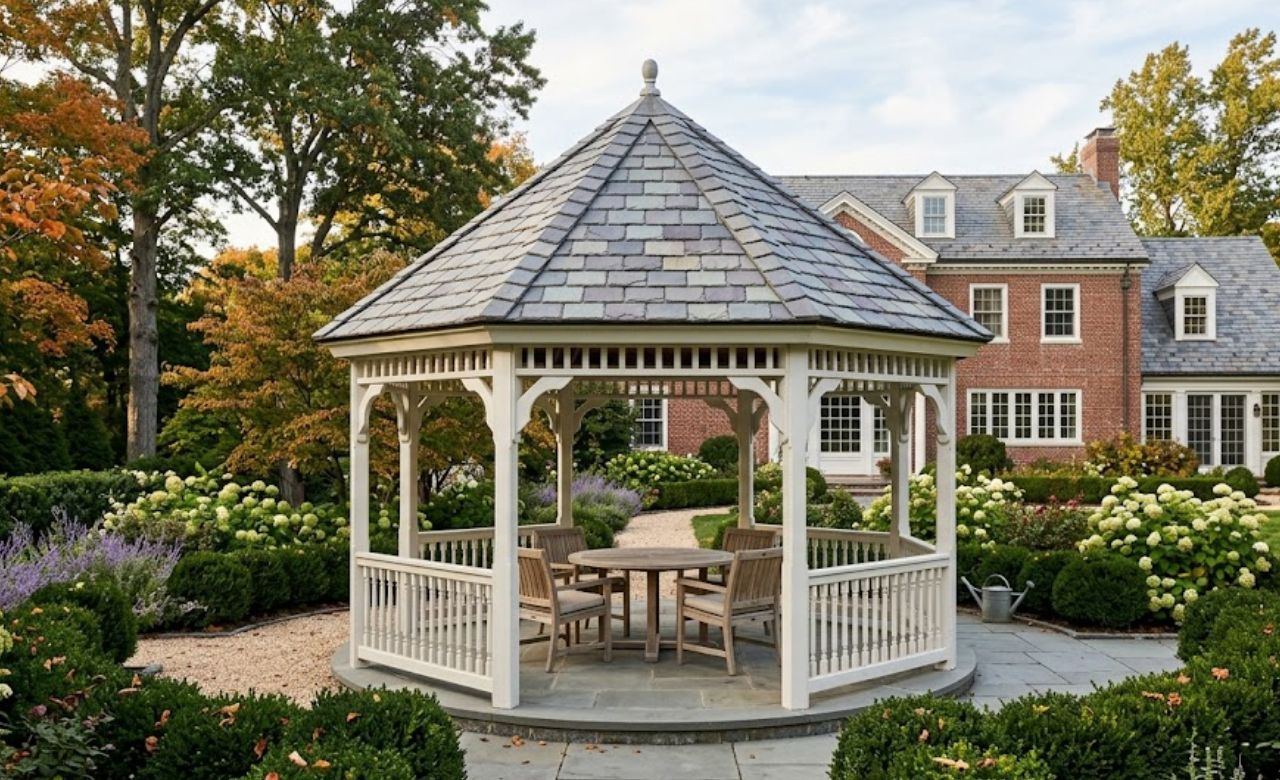
Slate is the most naturally beautiful roofing material available and a slate-roofed gazebo carries a elegance and permanence that no other material delivers. The variation in tone across individual slate tiles, ranging from blue-grey to green-grey to purple-grey depending on the quarry source, gives a roof surface that looks genuinely handcrafted.
Like tile, slate is heavy and requires a frame built to handle the load. It is also one of the more demanding materials to install correctly and mistakes in installation significantly shorten its lifespan. A professionally installed slate roof on a solid gazebo frame can last well over a hundred years.
Slate Roofing Facts Worth Knowing
- Natural slate lasts 75 to 150 years when properly installed
- Available in blue-grey, green-grey, and purple-grey tones
- Heavier than tile and requires a reinforced frame
- Professional installation strongly recommended
- Synthetic slate alternatives available at lower cost and weight
10. Green Roof or Living Roof
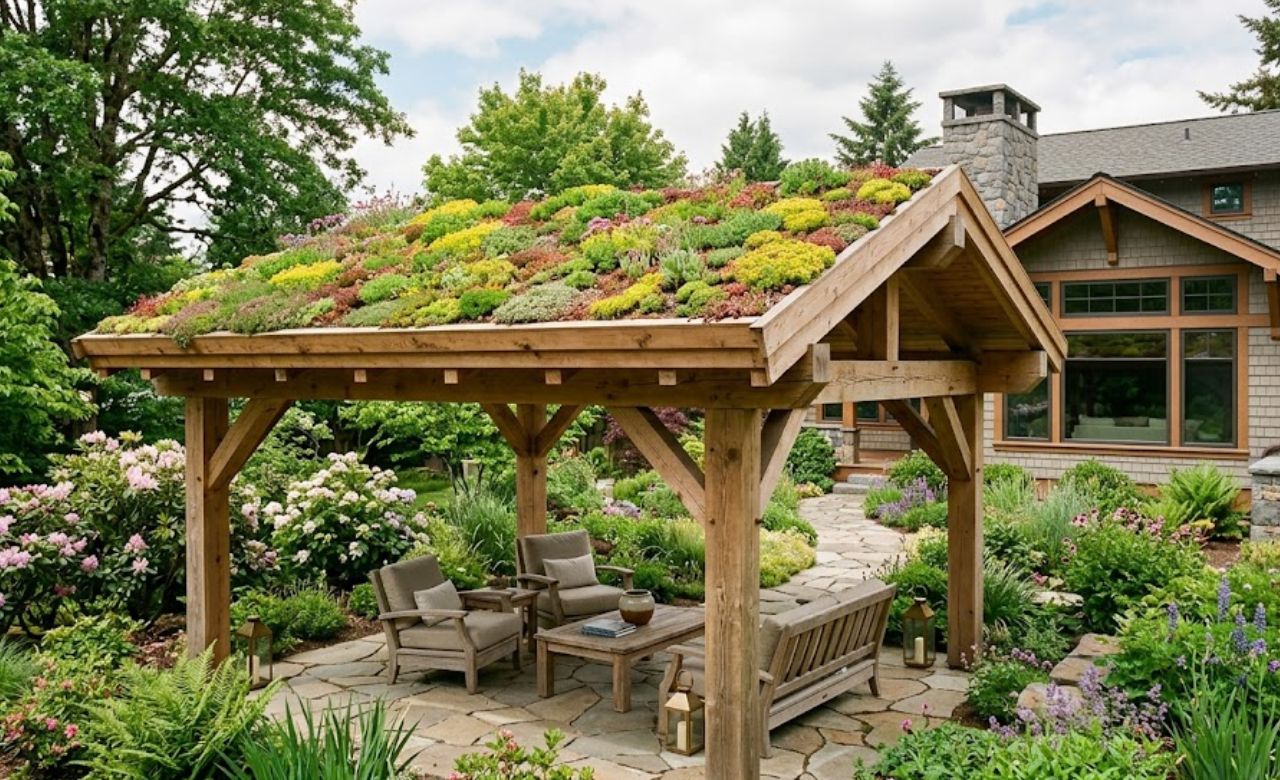
A green roof planted with sedum, succulents, or low-growing ground cover turns the gazebo roof itself into a garden feature. From inside the house or from an upper floor, a planted roof looks spectacular and it provides genuine insulation value and stormwater management benefits that no other roofing type delivers.
The structural requirements for a living roof are significant. You need a waterproof membrane, a drainage layer, a growing medium, and plants, all of which add considerable weight to the roof frame. This is not a DIY add-on for an existing gazebo but rather something to design into the structure from the start.
Living Roof Layers From Bottom to Top
- Structural decking on the roof frame
- Waterproof root barrier membrane
- Drainage mat or aggregate layer
- Filter fabric to separate drainage from growing medium
- Lightweight growing medium 3 to 6 inches deep
- Sedum, succulents, or low-growing ground cover plants
11. Bamboo Roofing
Bamboo roofing panels bring the same lightweight tropical character to a gazebo roof that bamboo posts and walls bring to the structure below. Woven bamboo panels or split bamboo laid in overlapping rows create a natural, textured surface that suits open-sided gazebos in warm climates particularly well.
Bamboo requires more maintenance than most roofing materials because it is susceptible to moisture absorption and UV degradation without regular treatment. A quality bamboo sealant applied annually keeps the material performing well and prevents the greying and splitting that untreated bamboo develops quickly outdoors.
Bamboo Roofing Maintenance Schedule
- Clean with a soft brush and mild soap solution annually
- Apply UV-protective bamboo sealant once per year
- Inspect for cracking or splitting after each winter season
- Replace individual damaged panels as needed rather than full roof
- Store any spare panels flat and off the ground for future repairs
12. Pergola Style Open Beam Roof
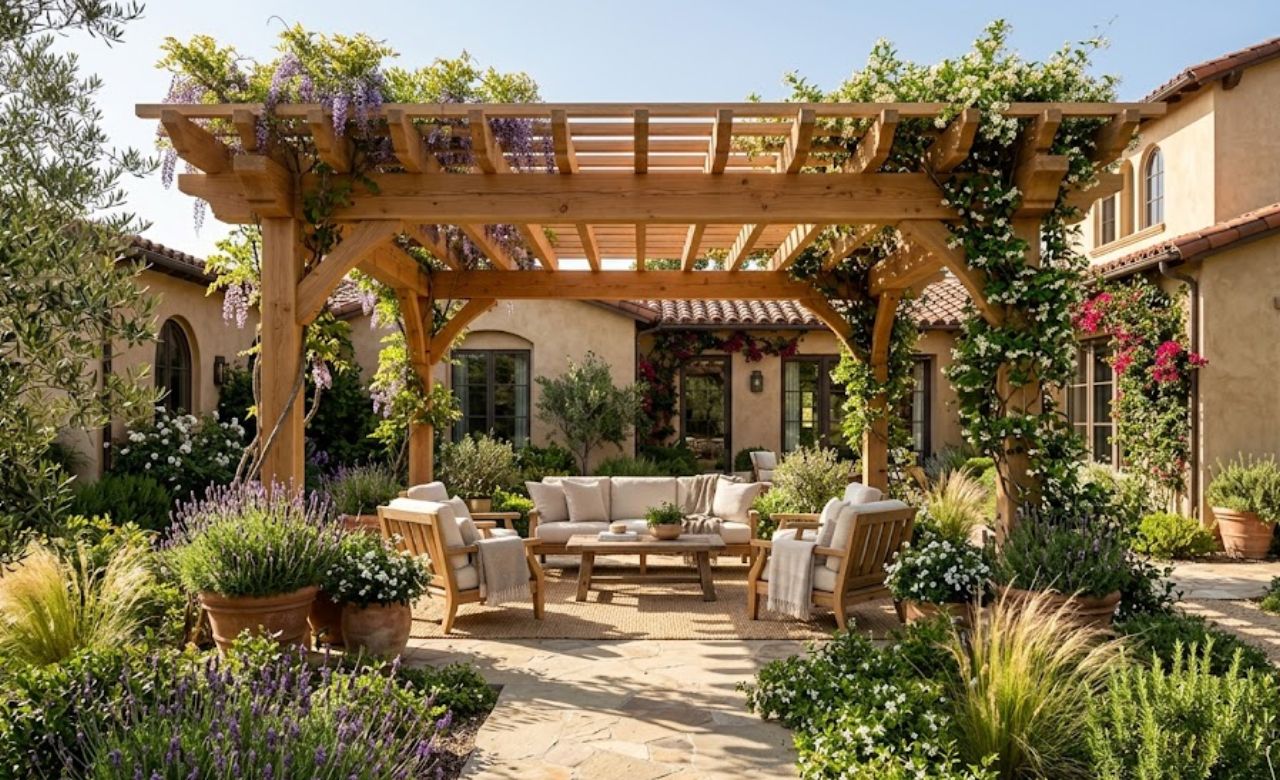
An open beam roof with no solid covering at all is a legitimate and very popular gazebo roof style that deserves a place on this list. Evenly spaced rafters or decorative beams without sheathing or roofing material let filtered light through, create dappled shade, and provide the perfect frame for climbing plants to fill in over time.
This style requires zero roofing material investment and essentially no maintenance beyond the occasional coat of sealant on the wood. The trade-off is that it provides no rain protection, so it suits climates with mild summers and low rainfall or backyards where the primary goal is shade rather than shelter.
Climbing Plants That Fill an Open Beam Roof Beautifully
- Wisteria for dramatic spring flowering
- Climbing roses for color and fragrance
- Jasmine for evening fragrance
- Virginia creeper for fast coverage and autumn color
- Grape vines for a productive and beautiful canopy
13. Onion Dome or Pagoda Roof
An onion dome or pagoda-style roof takes a gazebo from a functional backyard structure to a genuine architectural feature. The curved or tiered profile requires more complex framing than a standard hip or pyramid roof but the visual result is unlike anything else in a residential garden setting.
Aluminum or fiberglass panels formed into the curved profile are the most practical modern approach to this roof style. Traditional examples used hand-cut timber shingles laid over a curved frame but contemporary materials make the same visual effect achievable without specialist carpentry skills.
Roof Styles in This Category
- Onion dome: rounded bulging profile, Eastern European influence
- Pagoda: tiered with upswept eave tips, East Asian influence
- Bell curve: single smooth curve from peak to eave, classic gazebo profile
- Double pitch: steep upper section with shallower lower eave, Victorian style
- Ogee curve: S-shaped profile, most complex and most dramatic option
14. Glass Roof Panels
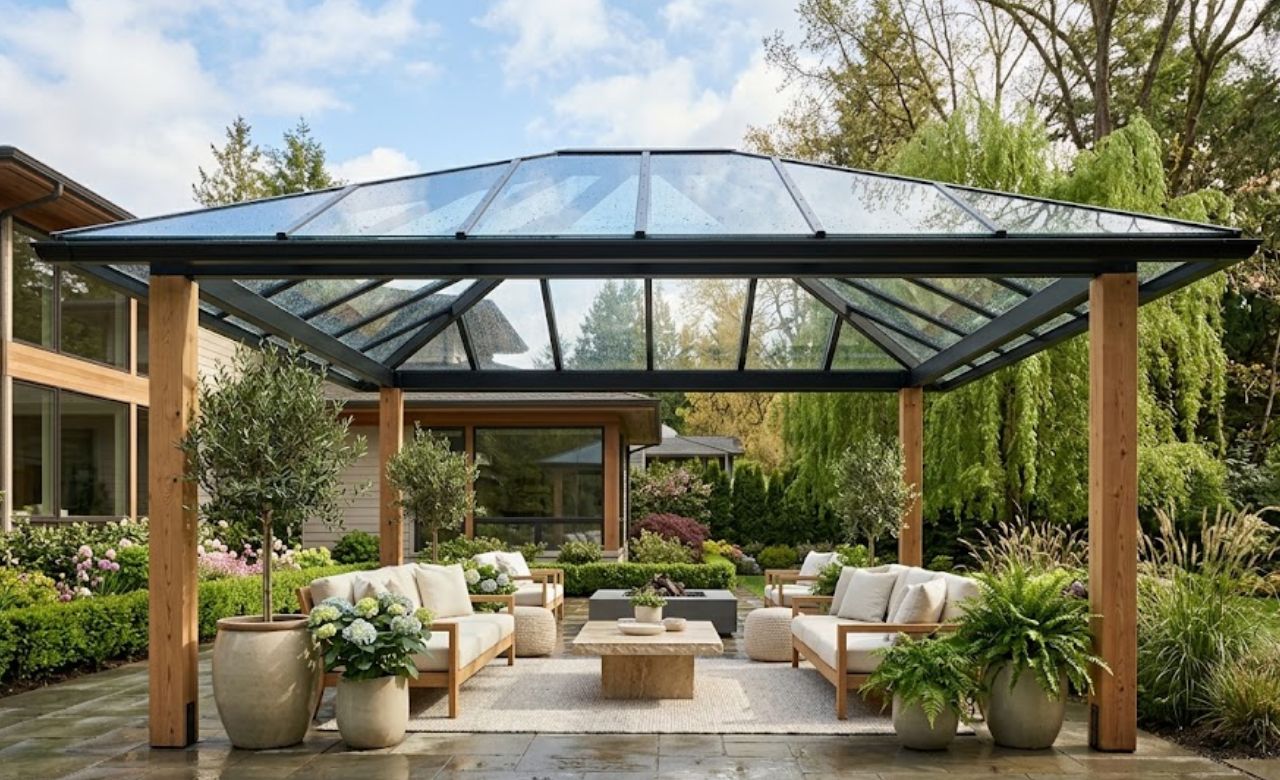
Tempered glass roof panels give a gazebo a conservatory quality that polycarbonate approximates but never fully matches. The clarity, the weight, the sound of rain on glass, and the way light behaves through it are all distinctly different from any plastic alternative and for many people worth the additional cost and complexity.
Laminated safety glass is the correct specification for an overhead application because if it breaks it holds together rather than raining sharp fragments into the space below. This is a non-negotiable safety requirement and not an optional upgrade for any glass roof installation.
Glass Roof Specifications That Matter
- Laminated safety glass minimum for overhead applications
- Low-iron glass for maximum clarity and color neutrality
- Toughened outer layer for impact resistance
- Argon-filled double glazing for thermal performance
- Professional installation required for structural integrity
15. Fabric Canopy Roof
A fabric canopy roof is the most flexible and accessible roofing option on this list. Stretched tightly over the gazebo frame or draped in soft folds, outdoor fabric canopies come in an enormous range of colors, patterns, and textures that no hard roofing material can match for sheer decorative versatility.
The practical limitation is lifespan. Even the best outdoor canopy fabric needs replacement every three to seven years depending on sun exposure and climate. The upside is that replacement is inexpensive and gives you the opportunity to completely refresh the look of the gazebo at low cost.
Fabric Canopy Materials Ranked by Durability
- Solution-dyed acrylic: longest lifespan, best color retention, most expensive
- Polyester with PVC coating: good waterproofing, moderate UV resistance
- Ripstop nylon: lightweight and strong, moderate sun resistance
- Canvas: natural look, requires waterproofing treatment to perform well
- Shade cloth: best for UV protection, not waterproof, ideal for dry climates
Match your roofing material color to the trim of your house rather than the siding. Trim colors tend to be more neutral and work better at connecting a backyard structure visually to the main building. This single decision is what makes a gazebo look like it belongs on the property rather than like it was dropped into the yard from somewhere else.
Final Thoughts
A gazebo roof is not just a practical decision. It is one of the most visible design choices in your entire backyard and the one that determines how well the structure holds up over years and decades of use.
Start with your climate requirements and your structural capacity, then choose the material that fits your style within those boundaries. A roof that suits the weather and the look of your property will serve you well for years without demanding constant attention or early replacement.
The best gazebo roof is the one that still looks good and performs reliably ten years from now, not just on the day it goes up.