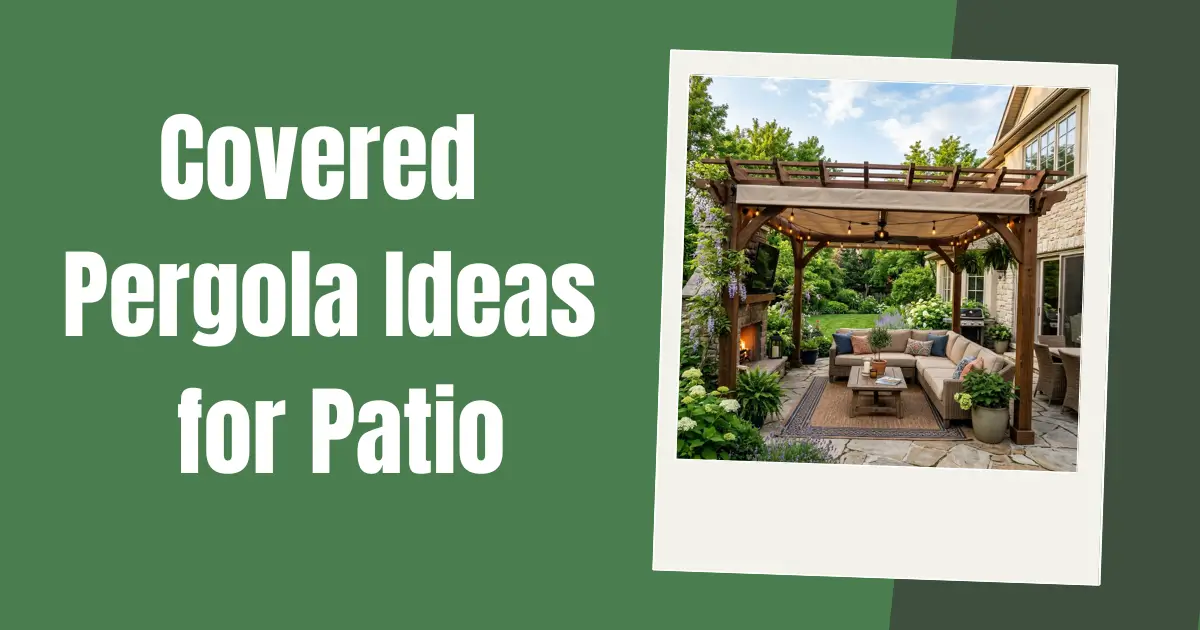
A covered pergola turns a basic patio into a space you can use through rain, harsh sun, and cooler temperatures without going back inside. The right cover makes the difference between a structure you use occasionally and one that becomes part of your daily routine.
Choosing the right cover for a patio pergola depends on your climate, how much natural light you want to keep, and how permanent you want the solution to be. Some covers work better for hot dry summers while others are built specifically for high rainfall or cold winter conditions.
These 18 ideas cover every cover type, style, and budget available for a patio pergola. Each one has been chosen because it genuinely performs across multiple seasons rather than solving one weather problem while creating another.
1. Polycarbonate Roof Panels
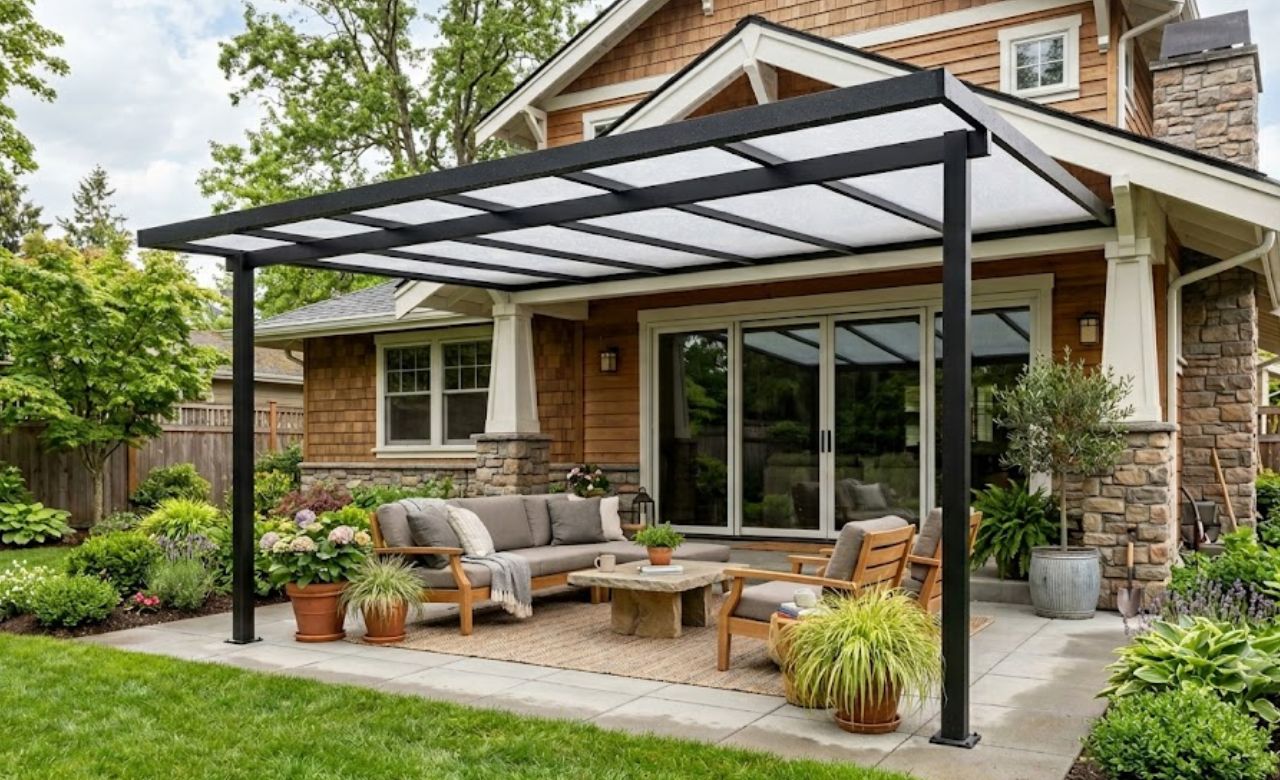
Polycarbonate panels are one of the most popular covered pergola choices for patio areas because they deliver rain protection without cutting off natural light. Twin-wall polycarbonate transmits up to 80 percent of daylight while blocking the majority of UV radiation which keeps the patio bright and usable even on overcast days.
Opal white is the most practical tint for a patio setting because it diffuses direct sunlight into a soft even glow rather than creating the hot spots and glare that clear polycarbonate produces on sunny days. The material is lightweight, easy to cut, and significantly cheaper than glass for the same covered area.
Polycarbonate Panel Specs Worth Knowing
- Twin-wall construction for rigidity and insulation value
- Opal white tint for comfortable diffused light quality
- Minimum 8mm thickness for a patio roof application
- UV protective coating on the outer surface
- Aluminum framing channels for clean professional edge finishing
2. Corrugated Metal Roof
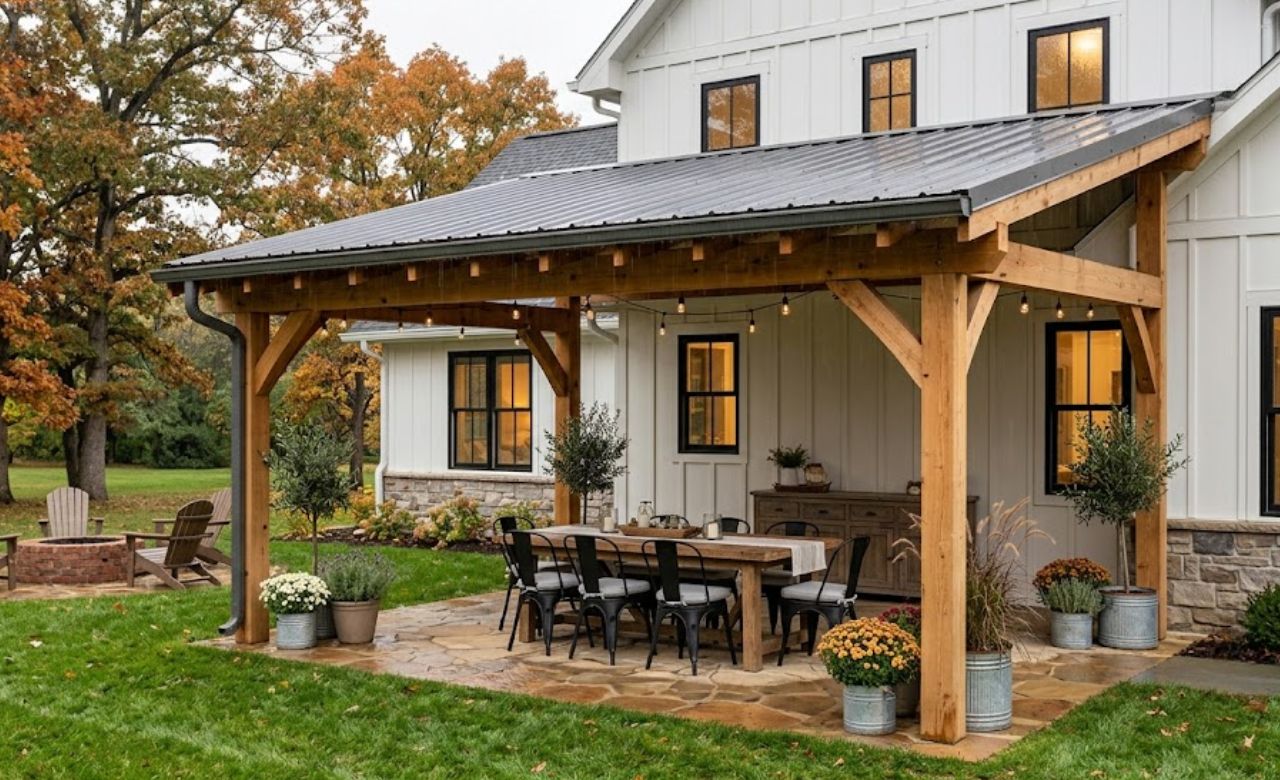
A corrugated metal roof over a patio pergola is one of the most durable and weather-resistant cover options available at a mid-range price point. Steel and aluminum corrugated panels shed rain instantly, handle wind loading well, and come in a wide range of powder-coated colors that suit everything from farmhouse to contemporary patio designs.
The acoustic quality of rain on a metal roof is something worth considering both as a pro and a con depending on your preference. Heavy rain on corrugated metal is loud which some people find genuinely pleasant and others find intrusive during conversation or outdoor dining.
Corrugated Metal Roof Color Options
- Woodland grey for a contemporary neutral look
- Monument or charcoal for a bold modern statement
- Heritage green for a classic garden or farmhouse style
- Galvanized natural for a raw industrial aesthetic
- Cream or white for a light reflective coastal look
3. Fabric Canopy Cover
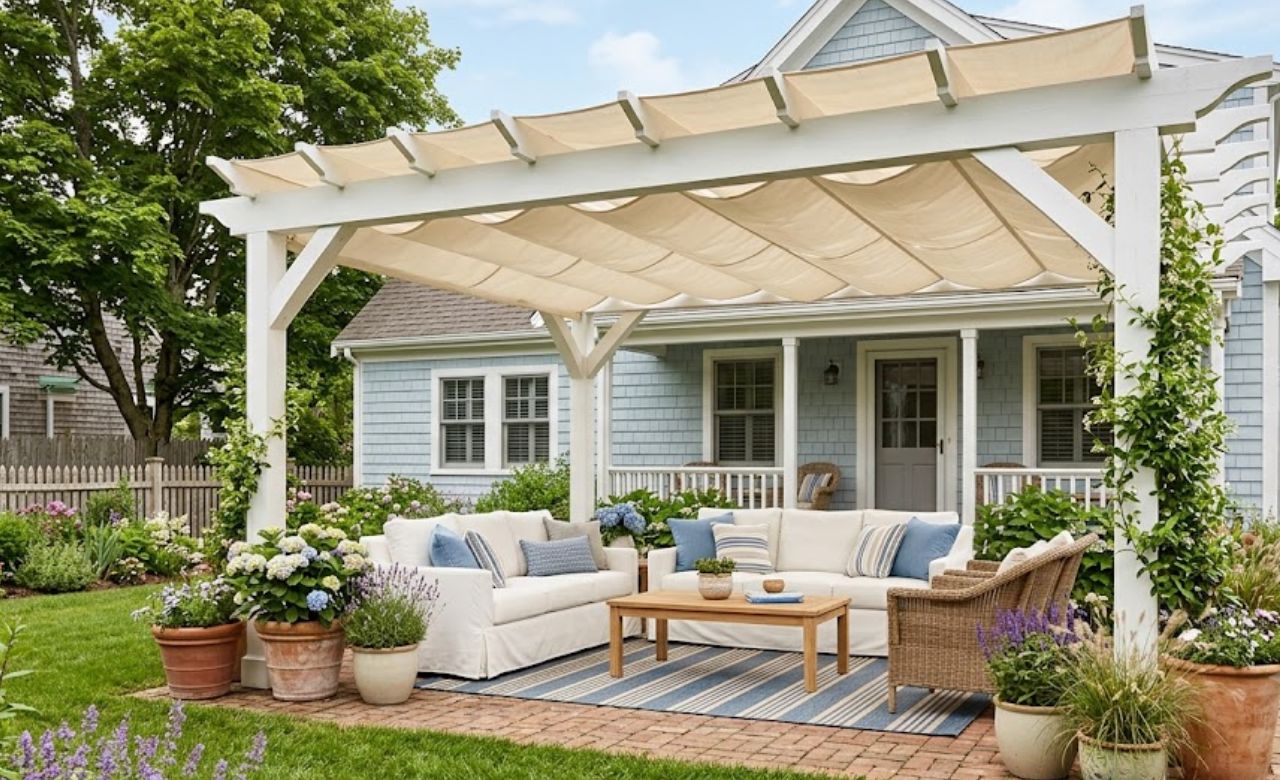
A fabric canopy stretched over a patio pergola frame delivers instant rain and sun protection with a softness and decorative quality that no hard roofing material matches. Solution-dyed acrylic and Sunbrella canvas are the two fabric types that hold up long enough outdoors to be worth the investment over cheaper polyester alternatives.
Fabric canopies are the most flexible cover option on this list because they can be removed seasonally, replaced in a new color when the look needs refreshing, and installed without any specialist tools or permanent modifications to the pergola frame. Replacement canopies are widely available for standard pergola sizes at a fraction of the original installation cost.
Fabric Canopy Maintenance Tips
- Remove and store during extended winter periods
- Clean with mild soap and soft brush to prevent mildew buildup
- Allow to dry fully before folding and storing
- Check fixing points and tensioning hardware each season
- Replace every three to seven years depending on sun exposure
4. Louvered Roof System
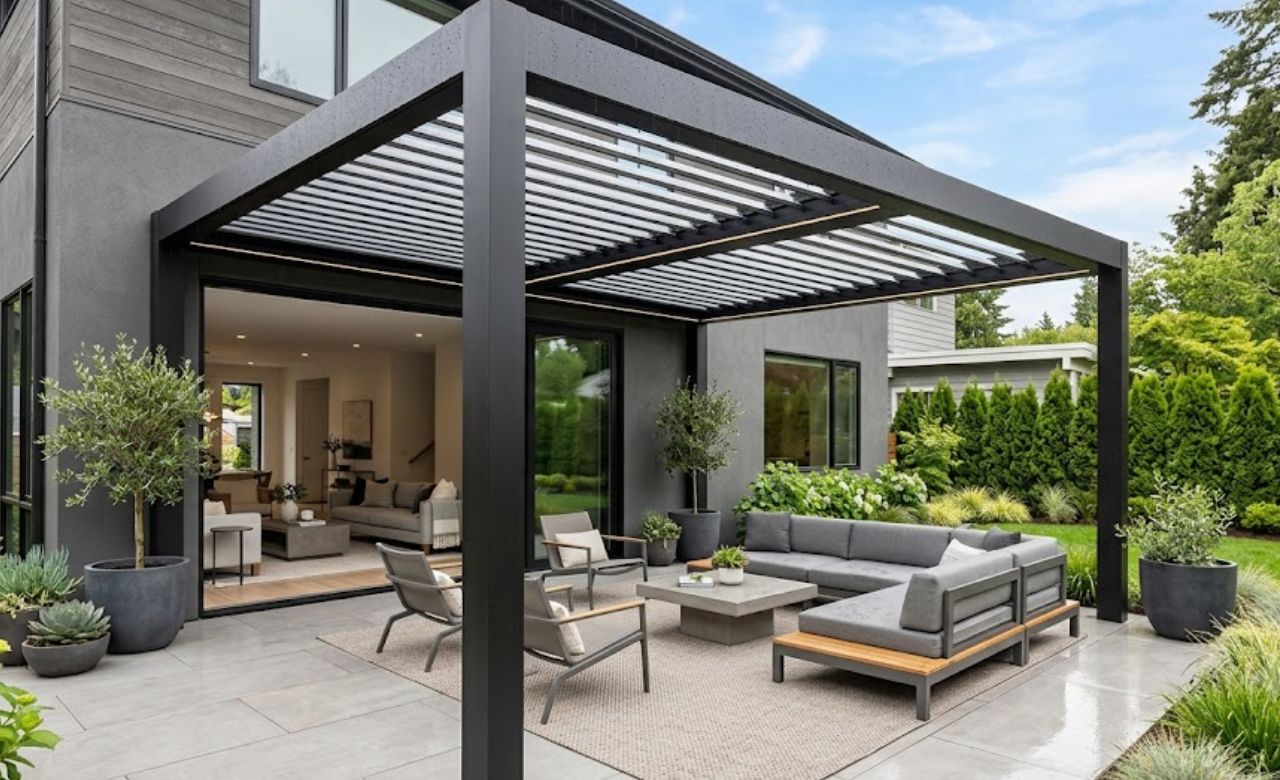
A louvered roof pergola is the most versatile covered patio solution available. Motorized aluminum louvers rotate from fully open to fully closed allowing you to dial in exactly the right amount of shade, airflow, and rain protection for any weather condition at any time of day.
The ability to open the louvers completely on a perfect day and close them fully during a downpour or at the peak of afternoon heat is what separates a louvered system from every other cover type. For a patio that gets year-round use in a variable climate the flexibility justifies the higher upfront investment over any fixed cover alternative.
Louvered Roof System Features
- Motorized louvers adjustable from fully open to fully closed
- Integrated drainage channels in each louver blade
- LED strip lighting integrated into the louver frame
- Wind sensor for automatic storm closure
- Smartphone app or remote control operation options
5. Glass Roof Panels
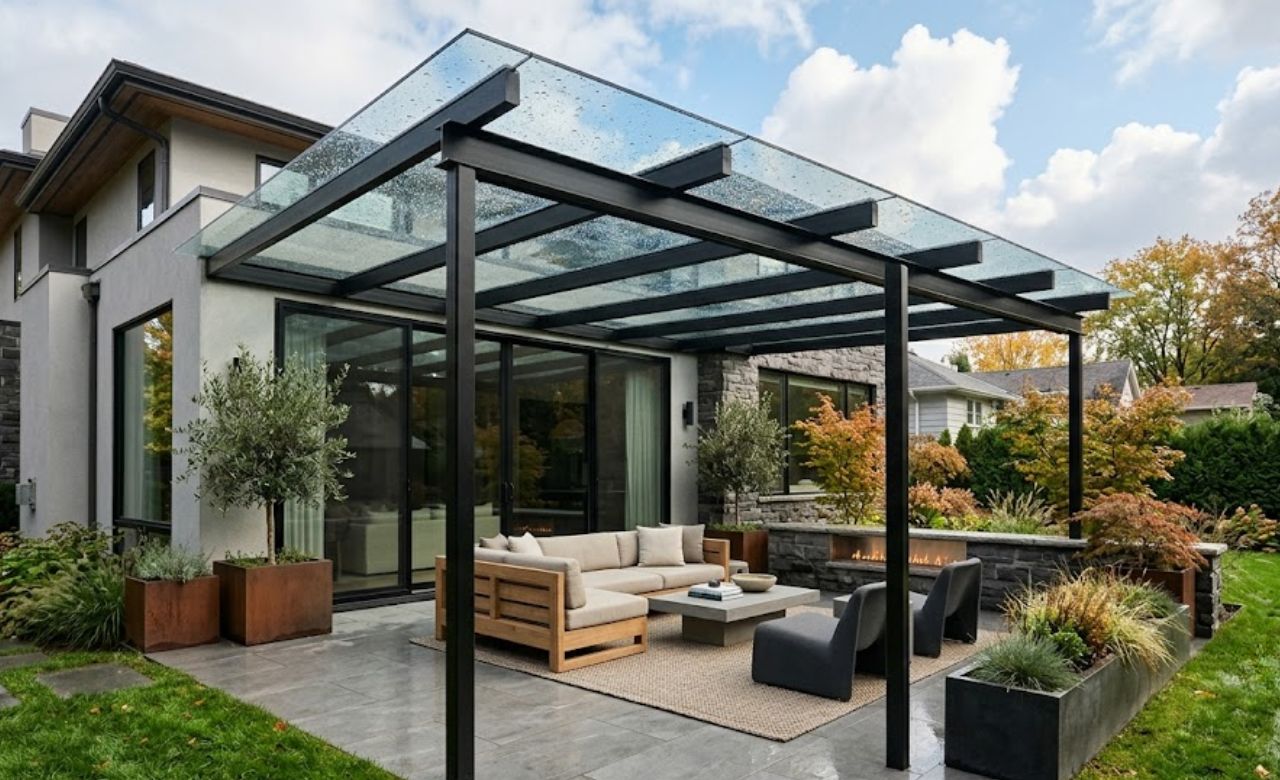
Tempered glass roof panels give a covered patio pergola a conservatory quality that polycarbonate approximates but never fully matches. The clarity, the weight, and the way natural light behaves through glass create a premium covered space that sits at the top of the price range and delivers a result that justifies it in the right setting.
Laminated safety glass is the correct specification for any overhead application. If it breaks it holds together rather than dropping sharp fragments into the space below which is a non-negotiable safety requirement rather than an optional upgrade. Double glazed units provide meaningful thermal performance in climates with cold winters.
Glass Roof Panel Specifications
- Laminated safety glass minimum for overhead use
- Low-iron glass for maximum clarity and color neutrality
- Double glazed units for thermal performance in cold climates
- Self-cleaning glass coating for reduced maintenance
- Professional installation required for structural safety
6. Cedar Shake Shingle Roof
A cedar shake shingle roof on a patio pergola brings natural texture and warmth that no manufactured material fully replicates. The irregular surface of hand-split cedar shakes creates depth and character that ages beautifully over time shifting from golden brown to a distinguished silver-grey patina that suits cottage, rustic, and garden patio styles.
Cedar contains natural oils that resist moisture and insects without chemical treatment. A well-maintained cedar shake roof handles rain, wind, and moderate snow load reliably for 25 to 30 years with periodic cleaning and a reapplication of wood preservative every five to seven years.
Cedar Shake Roof Maintenance Schedule
- Clean moss and debris with a soft brush annually
- Apply wood preservative every five to seven years
- Inspect for cracked or displaced shakes after winter storms
- Replace individual damaged shakes rather than full sections
- Keep overhanging branches trimmed to reduce debris accumulation
7. Retractable Awning Cover
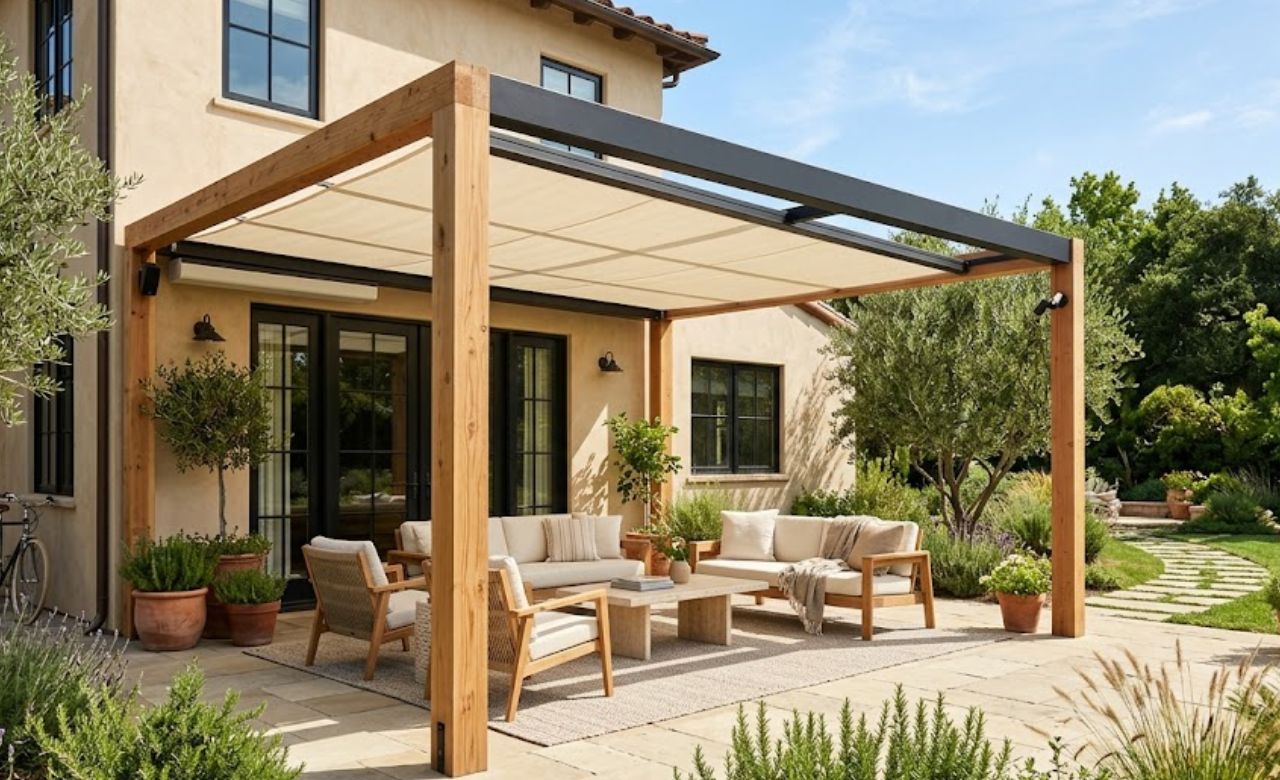
A retractable awning mounted to the pergola beam or house wall gives you a covered patio on demand without a permanent roof structure above the space at all times. Extend it during rain or peak afternoon sun and retract it fully to enjoy open sky when the weather is perfect.
Motorized retractable awnings with wind sensors that trigger automatic retraction in strong gusts are the most practical option for exposed patio positions. Manual pull systems work well for calmer positions and cost significantly less than motorized alternatives with comparable fabric quality.
Retractable Awning Options
- Motorized with wind sensor for exposed patio positions
- Manual cassette awning for a budget-friendly option
- Full cassette housing to protect fabric when retracted
- Solution-dyed acrylic fabric for best UV and color retention
- Side guide channels for wind stability during extension
For any covered patio pergola make sure the roof has adequate fall toward the outer edge so rainwater drains away from the house rather than toward it. A minimum fall of one in forty which is 25mm drop per meter of roof length keeps water moving freely and prevents pooling that accelerates roofing material deterioration.
8. Bamboo or Thatch Roof Cover
A bamboo or thatch roof cover brings a tropical resort quality to a patio pergola that suits coastal, Mediterranean, and garden entertaining spaces particularly well. The layered natural surface creates a warm diffused light underneath and a visual depth overhead that no flat manufactured panel delivers.
Synthetic thatch is the practical choice for most backyard patio applications because it handles UV exposure and moisture without the decomposition and pest issues that natural thatch develops over time. Quality synthetic thatch now carries a 15 to 20 year lifespan and meets fire safety standards that natural thatch cannot satisfy in most residential areas.
Natural vs Synthetic Thatch Comparison
- Natural thatch: most authentic look, replace every five to ten years
- Synthetic thatch: 15 to 20 year lifespan and fire rated
- Both require a steep roof pitch for effective water runoff
- Synthetic suits residential fire safety requirements better
- Pairs naturally with bamboo posts and open-sided patio frames
9. Sail Shade Cover
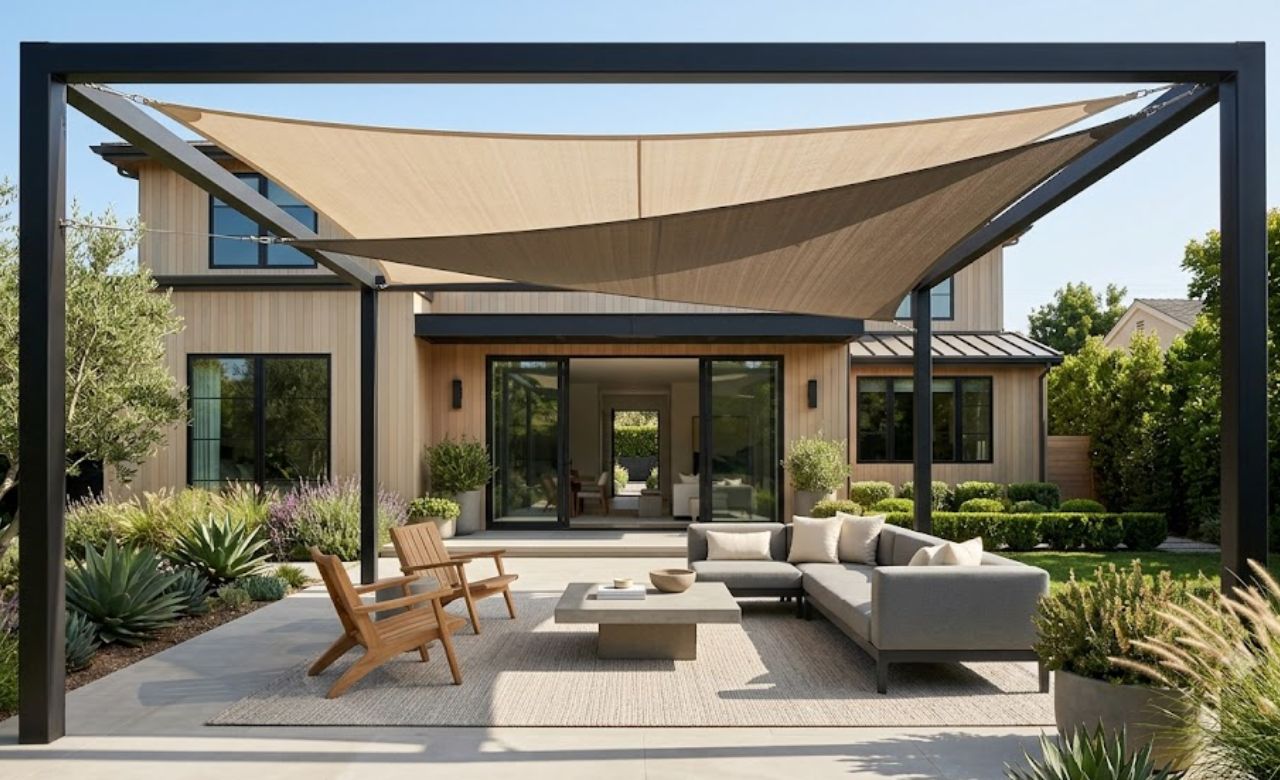
Shade sails stretched across a patio pergola frame provide sun coverage with a contemporary architectural quality that suits modern and minimalist patio designs better than almost any traditional roofing alternative. Triangular or rectangular panels in high-density polyethylene fabric block 90 to 95 percent of UV radiation while still allowing airflow through the weave.
Layering two or three sails at different heights and angles across the pergola frame creates a more complete coverage area and a more visually interesting overhead composition than a single panel. The sails can be removed seasonally and stored flat which extends their lifespan considerably in climates with harsh winters.
Shade Sail Setup Details
- High-density polyethylene fabric for best UV resistance
- Marine-grade stainless steel fixings throughout
- Layer two or three sails for full coverage with airflow
- Darker colors provide higher UV blockage than light tones
- Remove and store flat during winter to extend sail lifespan
10. Green Living Roof
A green living roof planted with sedum, succulents, or low-growing ground cover transforms the patio pergola into a garden feature that provides genuine insulation, stormwater management, and visual drama from any upper floor or elevated view of the property.
The structural requirements for a living roof are significant. A waterproof membrane, drainage layer, growing medium, and plants all add considerable weight to the roof frame. This is a feature to design into the structure from the start rather than add to an existing pergola and a structural engineer review is strongly recommended before committing to this approach.
Living Roof Layer Breakdown
- Structural decking on the roof frame as the base
- Root barrier waterproof membrane above the decking
- Drainage mat or aggregate layer above the membrane
- Filter fabric separating drainage from growing medium
- Lightweight growing medium three to six inches deep
- Sedum succulents or low-growing ground cover on top
11. Timber Tongue and Groove Ceiling
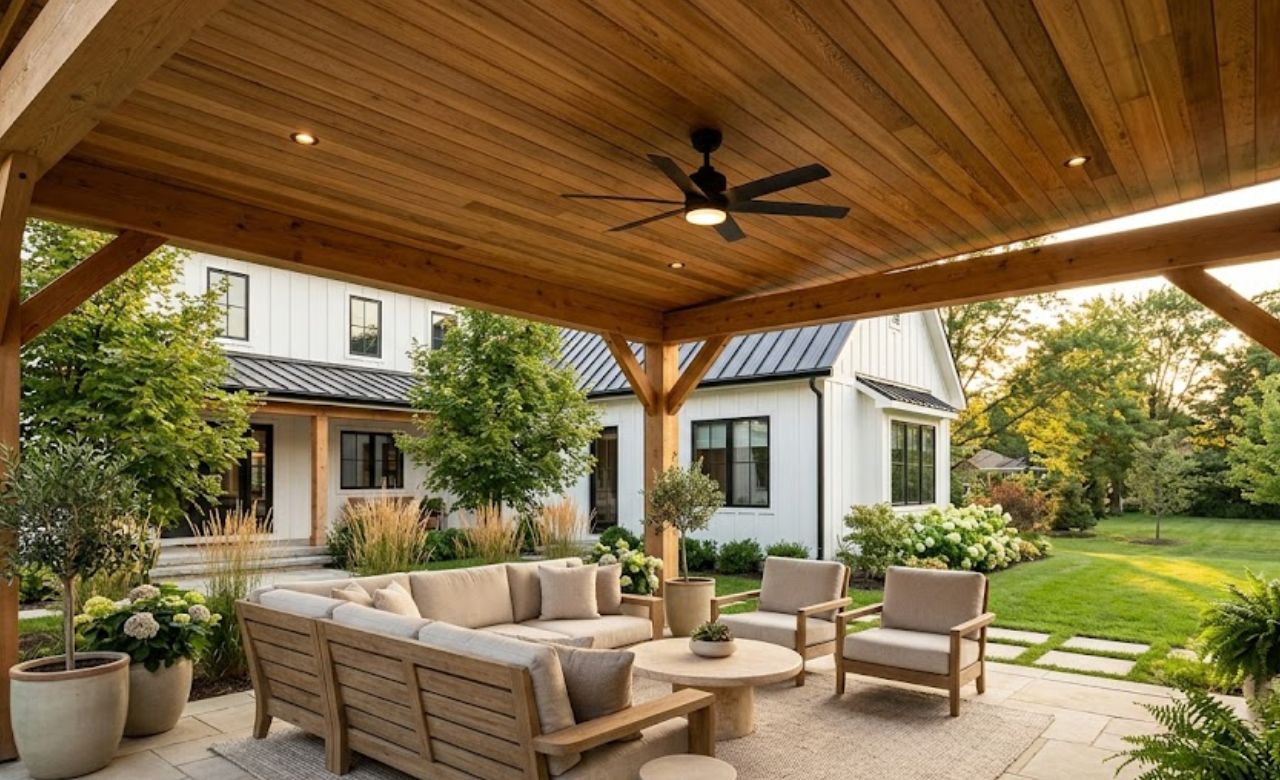
A solid timber tongue and groove ceiling installed across the pergola roof frame creates a covered patio with a warm architectural finish that sits between an open pergola and a fully roofed structure in both look and function. The timber ceiling provides shade and some weather protection while the gap between boards allows a small amount of airflow and filtered light through.
Western red cedar and treated pine are the two most practical timber choices for an outdoor tongue and groove ceiling application. Cedar handles moisture exposure naturally without treatment while pine requires a quality exterior stain or sealant applied every two to three years to maintain its performance and appearance.
Timber Ceiling Finishing Options
- Clear exterior oil for a natural warm wood finish
- Semi-transparent stain to add color while showing grain
- Solid stain for full color coverage and maximum UV protection
- Painted white for a coastal or Hamptons inspired look
- Dark charcoal stain for a contemporary dramatic finish
12. Pergola With Integrated Gutter System
Any covered patio pergola that handles significant rainfall performs significantly better with an integrated gutter and downpipe system that directs water away from the patio surface and the house foundation. A properly installed gutter turns a covered patio from a structure that manages rain into one that actively channels it away without any involvement from the people underneath.
Box gutters built into the outer beam of the pergola roof are the cleanest looking solution because they sit flush with the structure rather than hanging below the roofline like a standard fascia-mounted gutter. Connect downpipes to a rainwater tank or underground drainage system depending on your yard layout and local water management requirements.
Integrated Gutter System Details
- Box gutter built into the outer beam for a clean flush finish
- Minimum 1 in 100 fall along the gutter for effective drainage
- Leaf guard mesh over gutter openings in treed locations
- Connect downpipes to rainwater tank for water harvesting
- Overflow relief built into the system for extreme rainfall events
13. Woven Rope or Rattan Roof Panel
Woven rope, rattan, or seagrass panels laid across the top beams of a patio pergola create a natural filtered shade cover that suits bohemian, coastal, and tropical patio styles with a warmth and texture that manufactured panels cannot match. The woven surface allows filtered light and some airflow through while blocking direct sun effectively enough for comfortable use during most of the day.
This cover type suits dry climates and positions where the patio does not need to be fully weatherproof. In wetter climates woven panels work well as a secondary decorative layer over a waterproof polycarbonate or metal base rather than as a standalone rain cover.
Woven Panel Cover Options
- Rattan panels for a classic tropical look
- Seagrass weave for a finer more refined texture
- Rope weave for a coastal nautical aesthetic
- Woven bamboo mat for a budget-friendly natural option
- Layer over polycarbonate in wet climates for rain protection
Add a ceiling fan to any covered patio pergola that gets used during hot weather. A fan makes the temperature feel four to six degrees cooler through evaporative cooling and keeps insects moving away from the seating area. It is the single most cost-effective comfort upgrade available for a covered outdoor space.
14. Pergola With Retractable Roof Panels
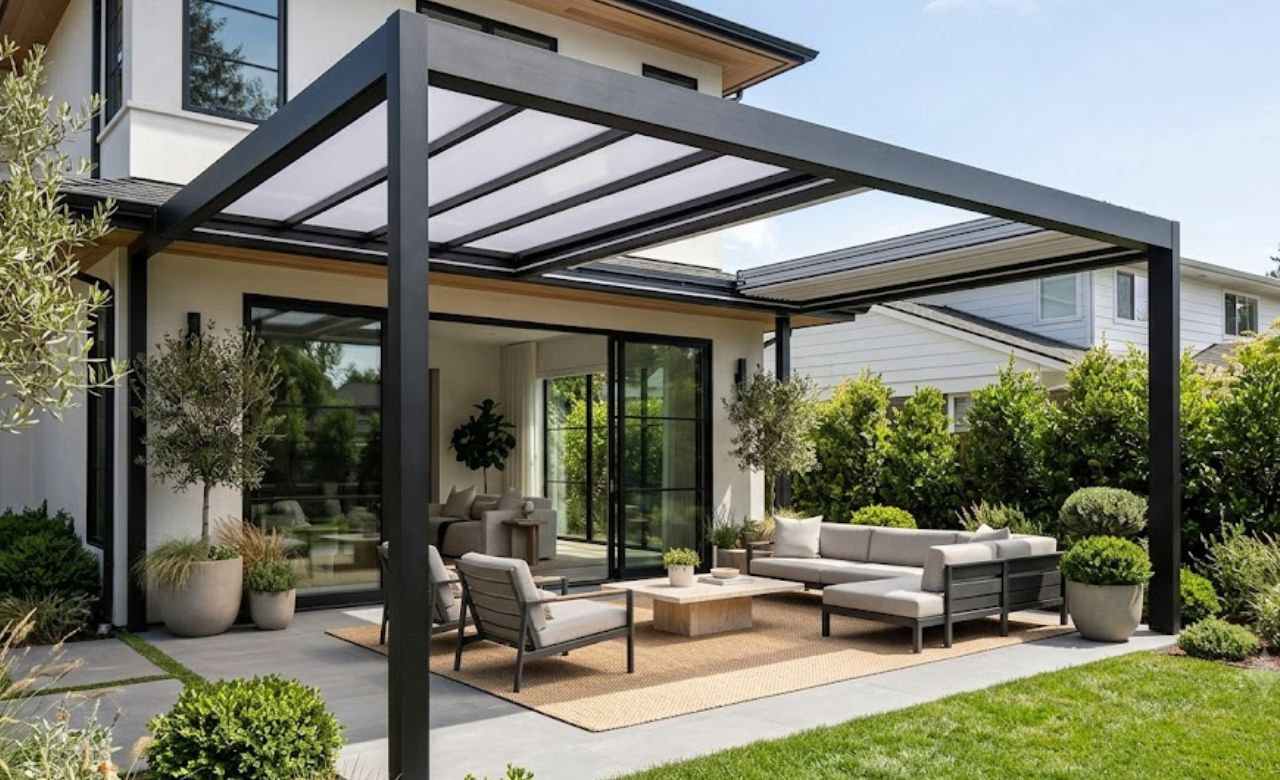
Retractable roof panels that slide open and closed along a track system give a covered patio the same flexibility as a louvered roof at a different price point and with a different aesthetic. Solid panels fully closed deliver complete rain and sun protection while fully open they disappear into a compact stack at one end of the pergola leaving the sky completely unobstructed.
Aluminum and polycarbonate are the two most common panel materials for retractable roof systems. Polycarbonate retractable panels maintain natural light when partially closed which suits patios that need both rain cover and brightness. Aluminum gives full shade and complete rain protection when closed for patios where heat management is the primary concern.
Retractable Panel System Options
- Polycarbonate panels for light transmission when partially closed
- Aluminum solid panels for full shade and rain protection
- Manual push systems for simple occasional use applications
- Motorized track systems for convenient everyday operation
- Custom sizing available for non-standard pergola dimensions
15. Pergola With Solar Panel Roof
A solar panel roof installed across the top of a patio pergola combines energy generation with weather protection in a single installation. The panels provide solid shade and rain protection underneath while generating electricity for the home above which means the covered patio effectively pays for itself over time through energy savings.
Frameless glass solar panels designed for pergola integration are now available from specialist suppliers and look significantly more refined than standard rooftop solar panels. The semi-transparent versions allow filtered light through while the opaque options provide full shade and maximum energy generation.
Solar Pergola Roof Considerations
- Frameless glass solar panels for the most refined appearance
- Semi-transparent panels for filtered light and energy generation
- Opaque panels for full shade and maximum power output
- Optimize panel angle for your location’s solar exposure
- Connect to home grid or battery storage system
16. Pergola With Outdoor Blinds
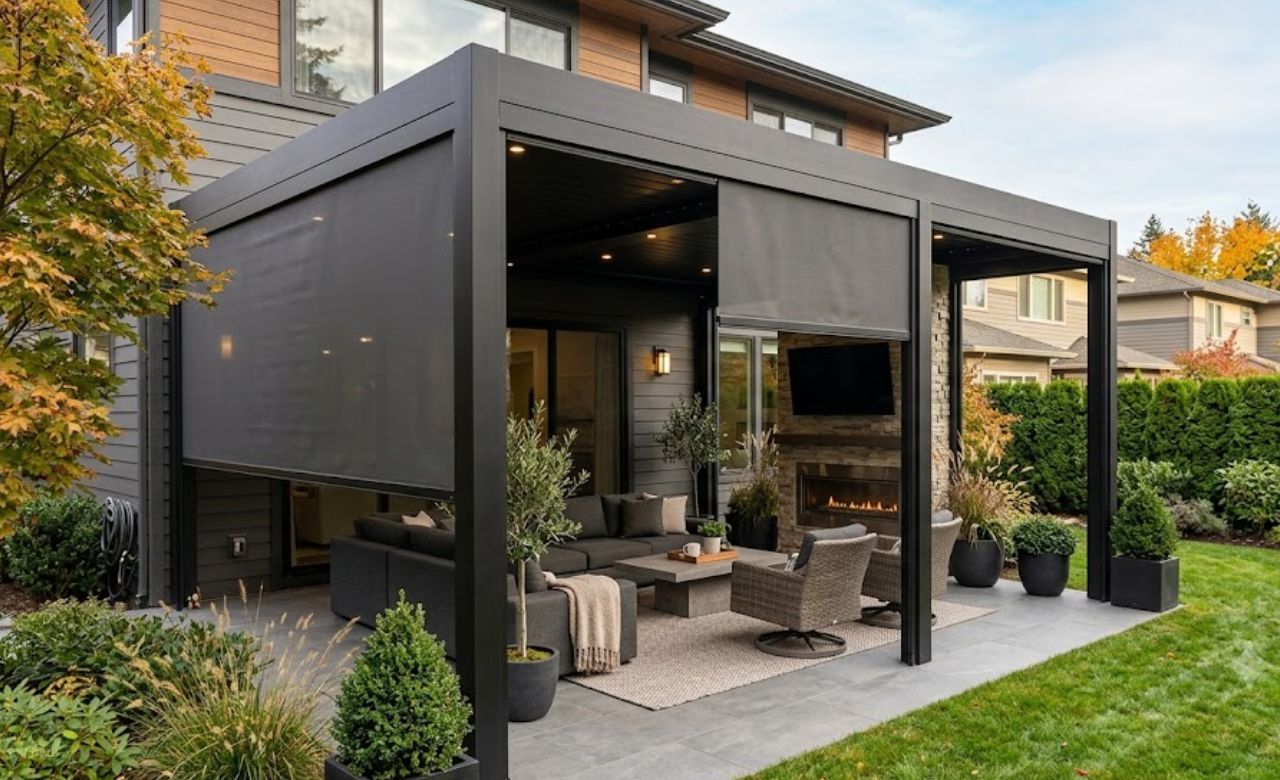
Outdoor roller blinds mounted to the pergola beam provide the most practically adjustable covered patio system available for everyday use. The blinds roll down to provide privacy, wind protection, and shade on the sides while the fixed roof cover above handles rain regardless of whether the blinds are up or down.
PVC zip track blinds that run in sealed channels on either side are the most wind-resistant option for exposed patio positions. The zip track system prevents the blind from billowing or lifting in wind which is the main functional failure of standard roller blinds in outdoor applications.
Outdoor Blind Options for a Covered Pergola
- PVC zip track for maximum wind resistance in exposed positions
- Mesh fabric for airflow with privacy and glare reduction
- Solid outdoor fabric for full privacy and complete shade
- Motorized operation for convenience and smart home integration
- Clear PVC panels for weather protection with unobstructed views
17. Insulated Roof Panel System
An insulated roof panel system uses a sandwich panel construction with a foam or mineral wool core between two steel or aluminum face sheets to deliver both weatherproofing and genuine thermal insulation in a single roofing product. The insulation value keeps the patio noticeably cooler in summer and warmer in winter compared to an uninsulated metal or polycarbonate roof of the same area.
This is the covered pergola roof system most commonly used for permanent patio enclosures and outdoor entertainment rooms because it performs closest to an actual building roof in both weather resistance and thermal comfort. The panels span longer distances without intermediate purlins which creates a cleaner ceiling appearance from below.
Insulated Roof Panel Advantages
- Thermal insulation reduces summer heat and winter cold
- Single product delivers structure weatherproofing and insulation
- Longer spans without intermediate support purlins
- Clean flat ceiling appearance from below
- Available in a wide range of steel colors and finishes
18. Pergola With Skylight Panels
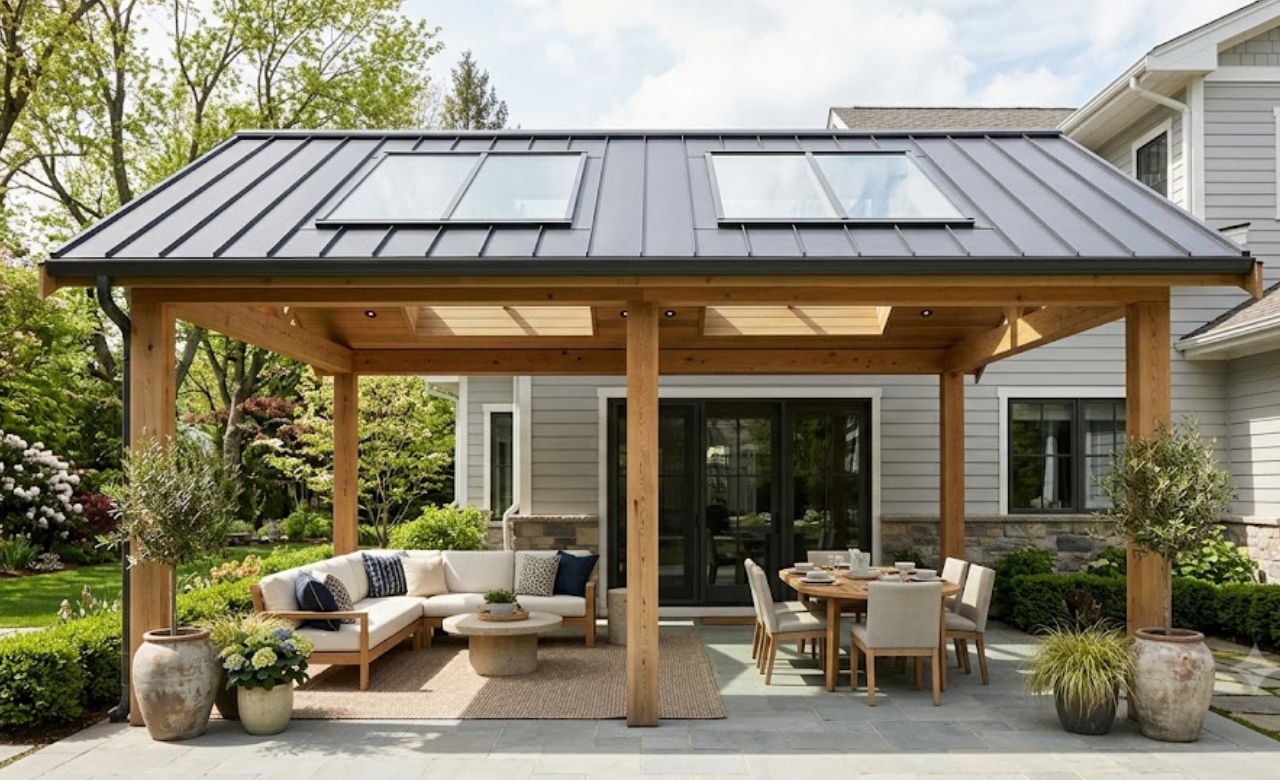
Incorporating skylight panels into an otherwise solid covered patio pergola roof brings natural light into the covered space without compromising the rain protection that a full cover provides. Strategic placement of one or two clear or frosted skylight panels in a metal or timber roof creates pools of natural light that make the covered patio feel open and connected to the sky rather than dark and enclosed.
Polycarbonate dome skylights and flat glass skylight units are the two most common options for pergola roof integration. Polycarbonate domes are less expensive and easier to install while flat glass units sit flush with the surrounding roof surface for a cleaner more architectural appearance.
Skylight Placement Tips for a Covered Pergola
- Position skylights over the dining or seating zone for direct light
- One skylight per 15 square meters of roof area as a general guide
- Frosted glass for soft diffused light without direct sun glare
- Clear glass for maximum light in shaded or south-facing positions
- Flashing and sealing details are critical for leak-free installation
For year-round patio use combine a fixed weatherproof roof with outdoor blinds on the sides rather than trying to solve all weather problems with the roof alone. A solid roof handles rain while retractable blinds manage wind and cold on the sides. This two-layer approach covers every season at a lower combined cost than a fully enclosed structure.
What Makes a Covered Pergola Worth Building
A covered patio pergola is one of the most practical and highest-return outdoor additions available for any home. It extends the functional hours of your outdoor space, protects furniture from weather damage, and creates a defined room that works across seasons rather than just on perfect weather days.
The 18 cover ideas on this list range from budget fabric canopies to premium louvered roof systems and solar panel installations. Every one of them solves the core problem of turning an occasionally usable patio into a space that works reliably through whatever your local climate delivers.
Pick the cover type that suits your climate first, your budget second, and your style third. A covered pergola that handles your actual weather conditions will serve you better and longer than one chosen purely for how it looks in a photo.
Frequently Asked Questions
1. What is the most durable cover for a patio pergola?
Insulated steel roof panels and tempered glass are the most durable options. Both handle all weather conditions for decades with minimal maintenance when professionally installed.
2. Can I add a cover to an existing pergola?
Yes in most cases. Fabric canopies, shade sails, polycarbonate panels, and corrugated metal can all be retrofitted to an existing pergola frame provided the structure is sound and sized to handle the additional load.
3. What covered pergola suits a cold winter climate best?
An insulated roof panel system combined with outdoor blinds on the sides gives the best year-round thermal performance. A louvered roof with integrated heating is the premium option for genuine four-season use.