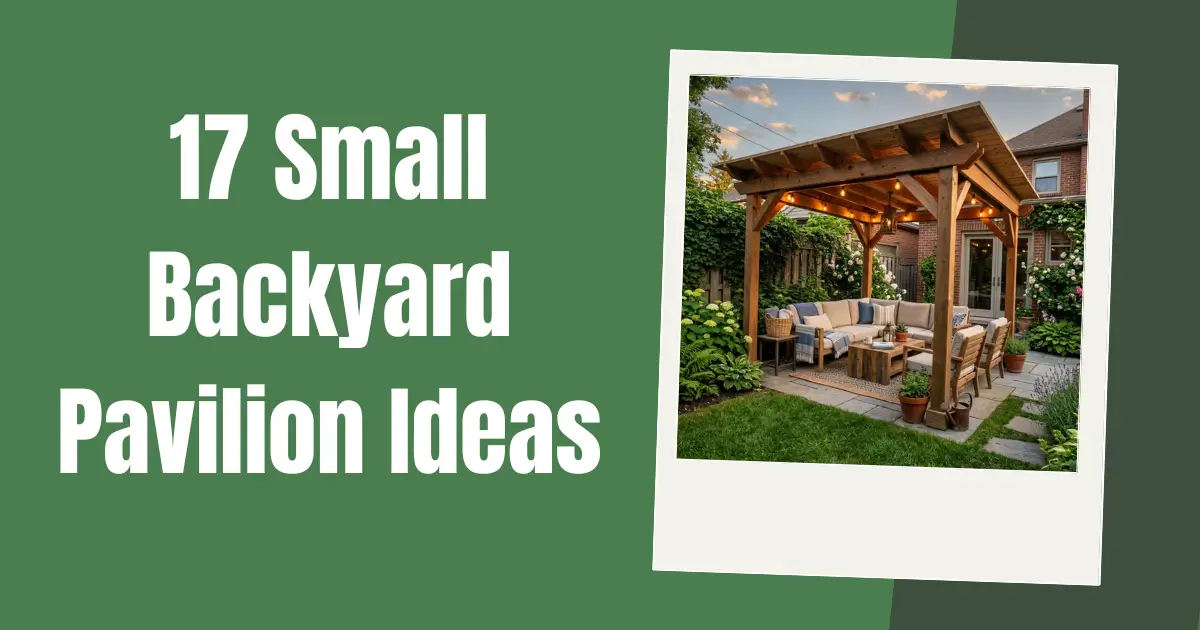
Compact pavilion designs with built-in seating, a simple roof, and a defined floor surface are the most practical starting point for small backyard dining and seating setups that actually get used daily.
Small backyards benefit from a pavilion more than most people expect. One well-placed structure with the right size and proportions creates a dedicated outdoor room that makes the whole yard feel more organized and intentional.
These 17 ideas are chosen specifically for tighter outdoor spaces where every square meter counts. Each one delivers a functional dining or seating setup without overwhelming the yard or sacrificing the open space that makes a small backyard feel livable.
1. Simple Four-Post Pavilion With Flat Roof
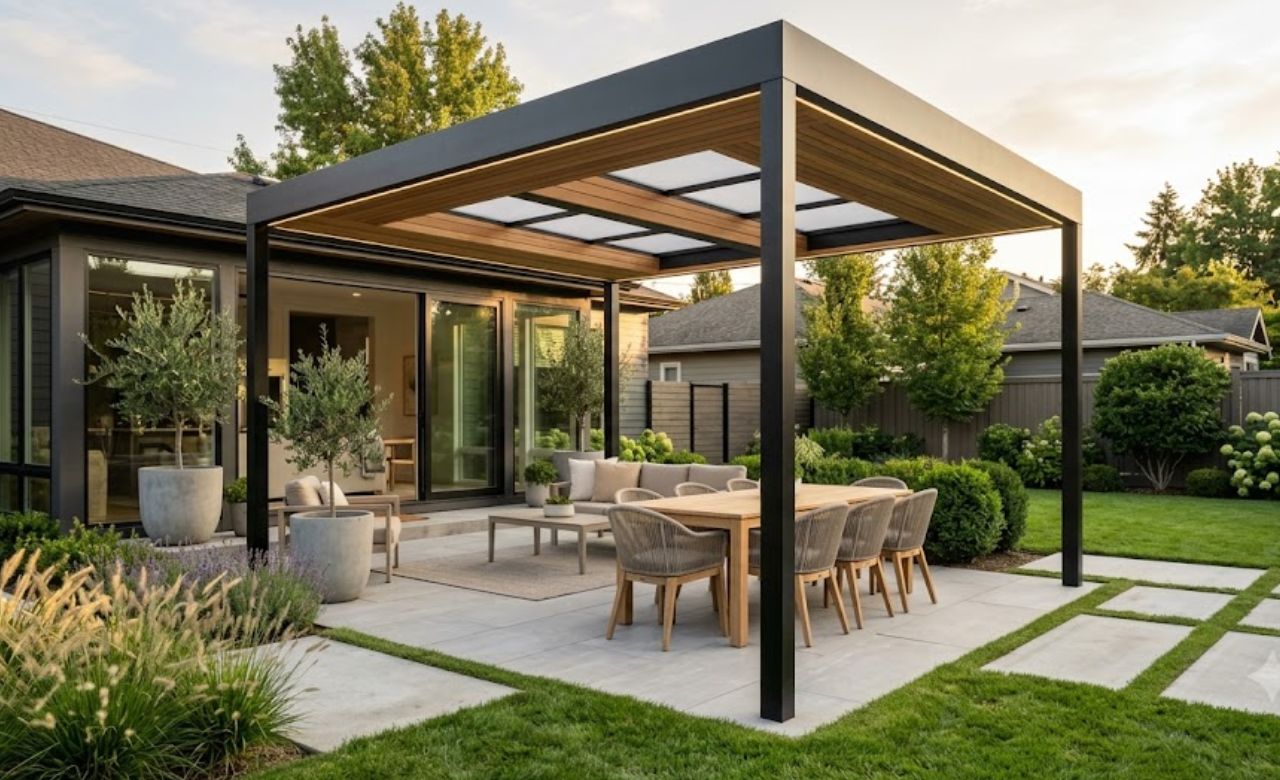
Four posts and a flat roof is the most space-efficient pavilion structure available for a small backyard. Clean horizontal lines keep the visual weight low and the simple geometry suits modern and contemporary outdoor design better than almost any other style.
Powder-coated aluminum posts with a polycarbonate or timber slatted roof panel keeps maintenance minimal and handles weather reliably across multiple seasons without annual treatment.
Why This Style Works in Small Yards
- Slim posts take up minimal floor space inside the structure
- Flat roof keeps the overall height low and visually light
- Suits modern paving and minimal furniture styles
- Polycarbonate roof option keeps natural light flowing through
2. Attached Pavilion Off the Back Door
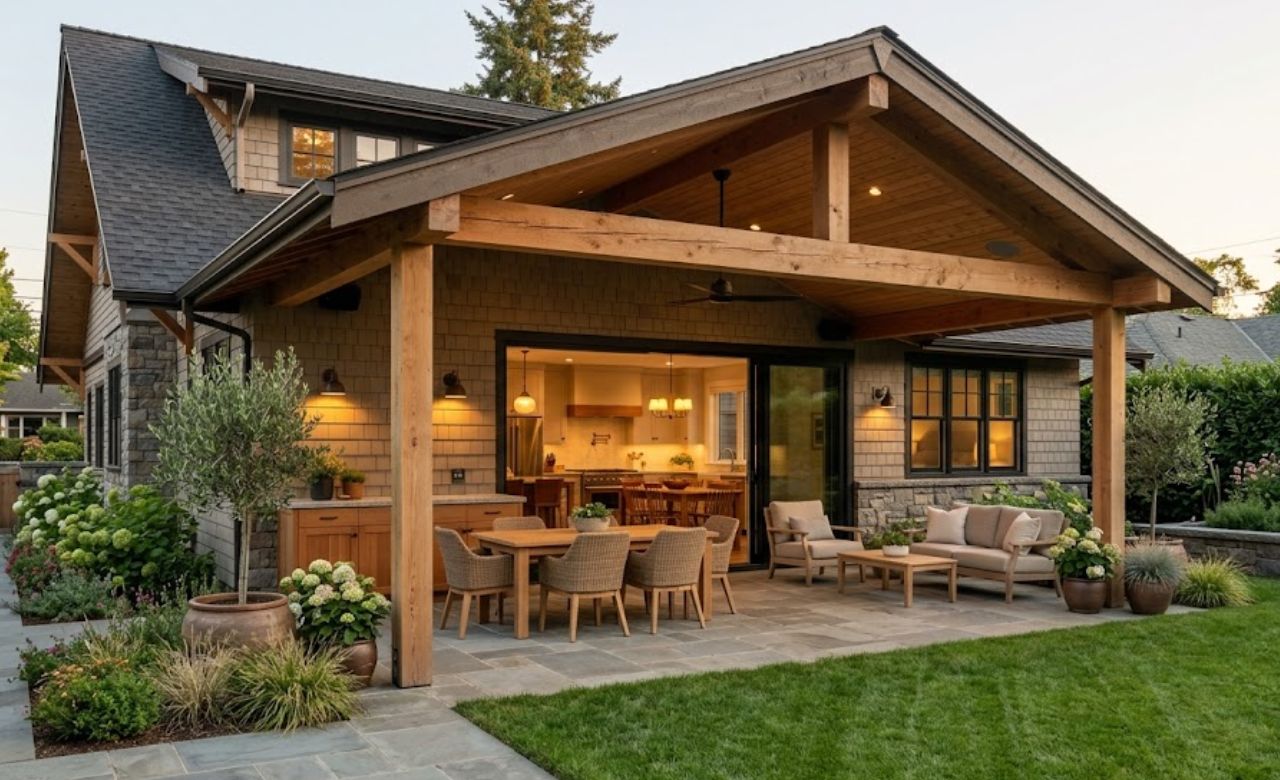
Attaching a pavilion directly to the rear wall of the house creates a covered outdoor dining area that feels like a natural extension of the interior rather than a separate structure dropped into the yard. One wall is already built which reduces both material cost and construction time significantly.
Position it outside the kitchen or dining room door and the transition between indoor and outdoor dining becomes completely seamless. Guests move between the two spaces without thinking about it which is exactly how a well-designed small backyard should function.
Attached Pavilion Design Tips
- Align the roof pitch with the existing house roofline
- Use the house wall for mounted lighting and outdoor speakers
- Install a ceiling fan on the house wall end for hot weather airflow
- Match post and beam material to existing exterior finishes
- Add a gutter along the house wall attachment for water management
3. Timber Pavilion With String Lights
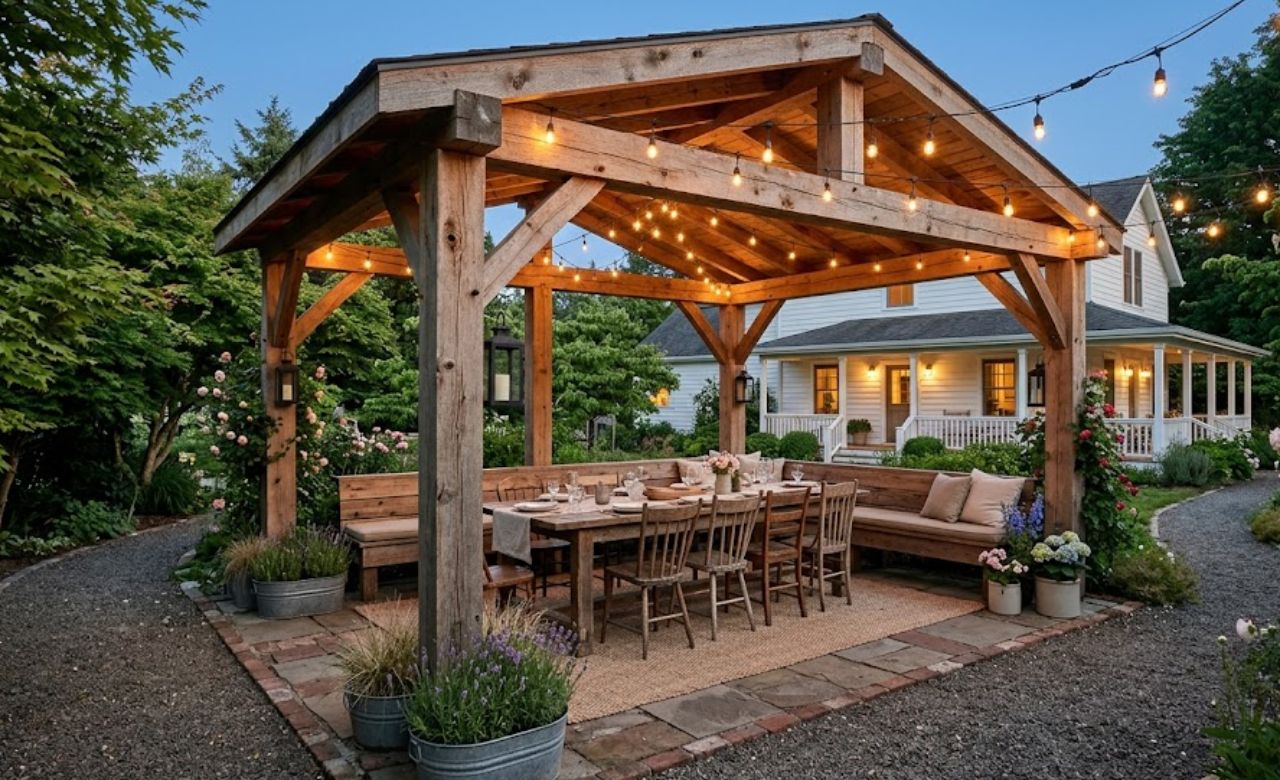
Rough-sawn timber posts and beams with string lights draped across the top create a warm and welcoming outdoor dining space that feels personal and relaxed rather than designed to impress. This style suits gardens, older properties, and backyards where a polished modern look would feel out of place.
Warm white string lights in loose parallel rows across the roof frame do more atmospheric work per dollar than any other single decorating addition. Pair with a simple timber dining table and mismatched chairs for a result that looks effortlessly styled.
Timber Pavilion Styling Details
- Rough-sawn hardwood or reclaimed timber for character
- Warm white string lights draped loosely across the top beams
- Hanging lanterns at different heights from the beams
- Simple timber bench seating along the interior sides
4. Pavilion With Built-In Bench Seating
Built-in bench seating along two or three interior sides of a small pavilion solves the biggest outdoor dining challenge in a compact yard which is fitting enough seating without freestanding furniture taking over the floor space.
Benches sit flush against the posts and perimeter frame keeping the center completely clear. Add storage underneath with lift-up lids and the structure becomes one of the most functional additions available for a small outdoor space.
5. Corner Pavilion for Small Yards
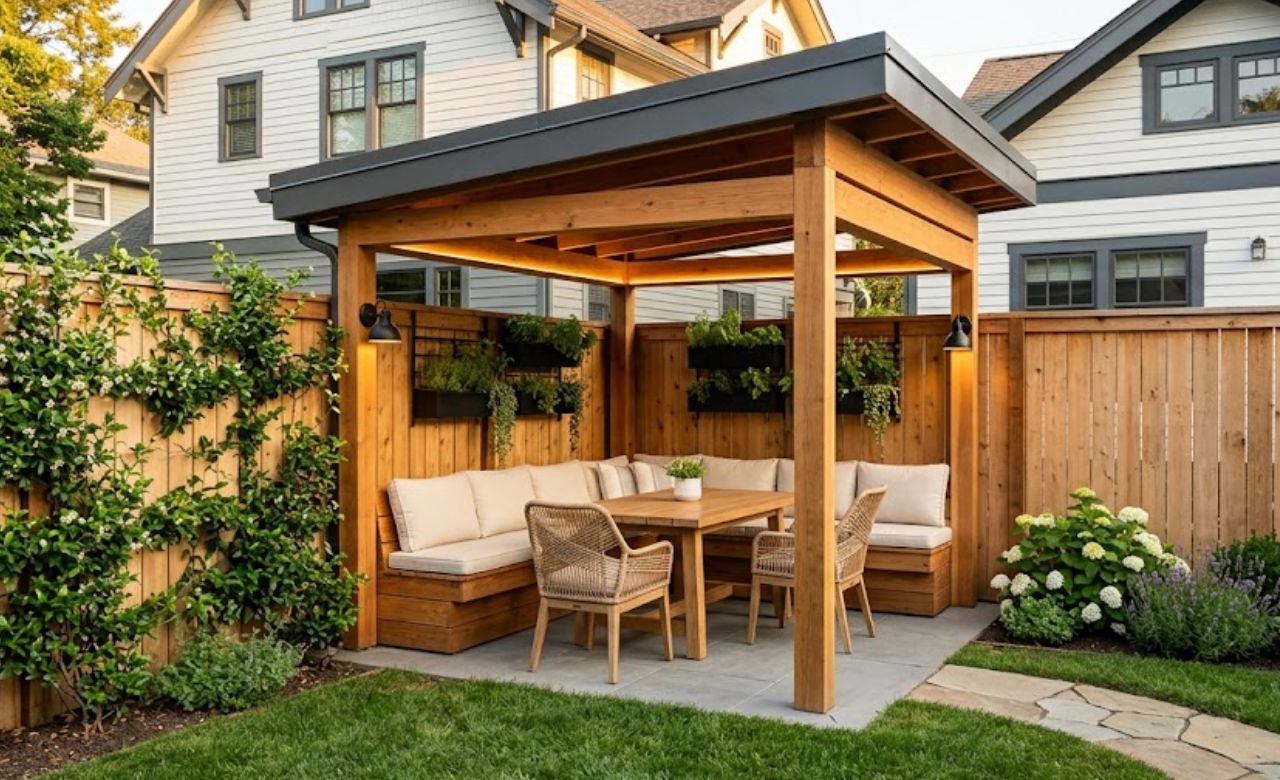
Placing a pavilion in the corner where two fence lines meet turns the most underused part of any small backyard into a defined dining and seating destination. Both fence lines act as natural privacy walls which means the structure only needs a roof and two open sides to feel like a complete outdoor room.
This placement keeps the main lawn or patio area completely open while still delivering a covered retreat within the same yard. For small backyards where every usable square meter counts this is one of the smartest positioning decisions available.
Corner Pavilion Setup Tips
- Use existing fence lines as two natural privacy walls
- Add climbing plants on one fence side for greenery and screening
- Install built-in bench seating along both fence walls
- Choose a compact 8×8 footprint for the tightest corner positions
6. Pavilion Over an Existing Patio Slab
Building a pavilion directly over an existing concrete or paved patio slab is the most cost-effective and least disruptive approach available. No new groundwork is needed, the footprint is already defined, and the existing surface handles furniture and foot traffic without any additional work.
Post base hardware bolted into the existing slab using expansion anchors avoids the need to dig footings entirely. Check the slab thickness before ordering hardware since thinner slabs require different anchor specifications than a full-depth concrete pour.
Patio Slab Pavilion Installation Tips
- Use expansion anchor post bases bolted into existing concrete
- Check slab thickness before ordering anchor hardware
- Match the pavilion footprint exactly to the existing slab edge
- Add outdoor rugs to define zones within the covered area
Keep your small backyard pavilion footprint to 10×10 feet or under. Anything larger starts to dominate a compact yard and makes the surrounding space feel smaller rather than better organized.
7. Steel Frame Pavilion With Shade Sails
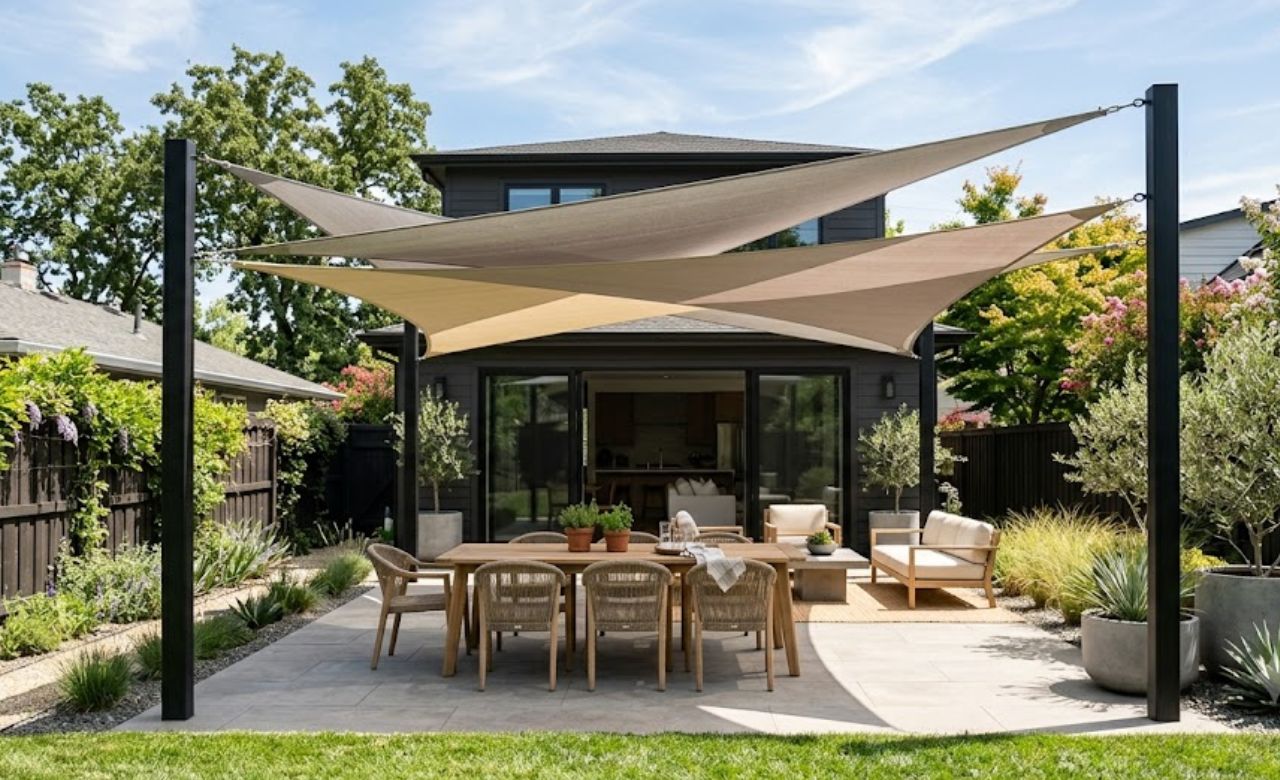
Slender steel frame posts with shade sails stretched across the top reduce the visual mass of the pavilion structure while still delivering meaningful sun protection for an outdoor dining area. In a small backyard where visual weight matters as much as physical footprint this approach makes a significant difference.
Triangular sails layered at slightly different heights create a more dynamic overhead composition than a single rectangular panel. Choose a color that blends with fence and house tones rather than contrasting sharply so the pavilion reads as part of the yard.
8. Pavilion With Outdoor Kitchen Counter
Adding a simple outdoor kitchen counter along one side of a small backyard pavilion turns it from a dining space into a complete entertaining destination. Guests gather at the counter while food is being prepared and then move to the dining table without anyone needing to go back inside the house.
Keep the kitchen layout genuinely simple for a small pavilion. A built-in barbecue, a preparation bench, and a small bar fridge handle the vast majority of outdoor entertaining needs without requiring the complexity or cost of a full outdoor kitchen fit-out.
Outdoor Kitchen Elements Worth Including
- Built-in gas barbecue as the primary cooking surface
- Stainless steel preparation bench for weather resistance
- Bar fridge for drinks and dining essentials
- Deep basin sink with outdoor-rated tapware
9. Pavilion With Louvered Roof
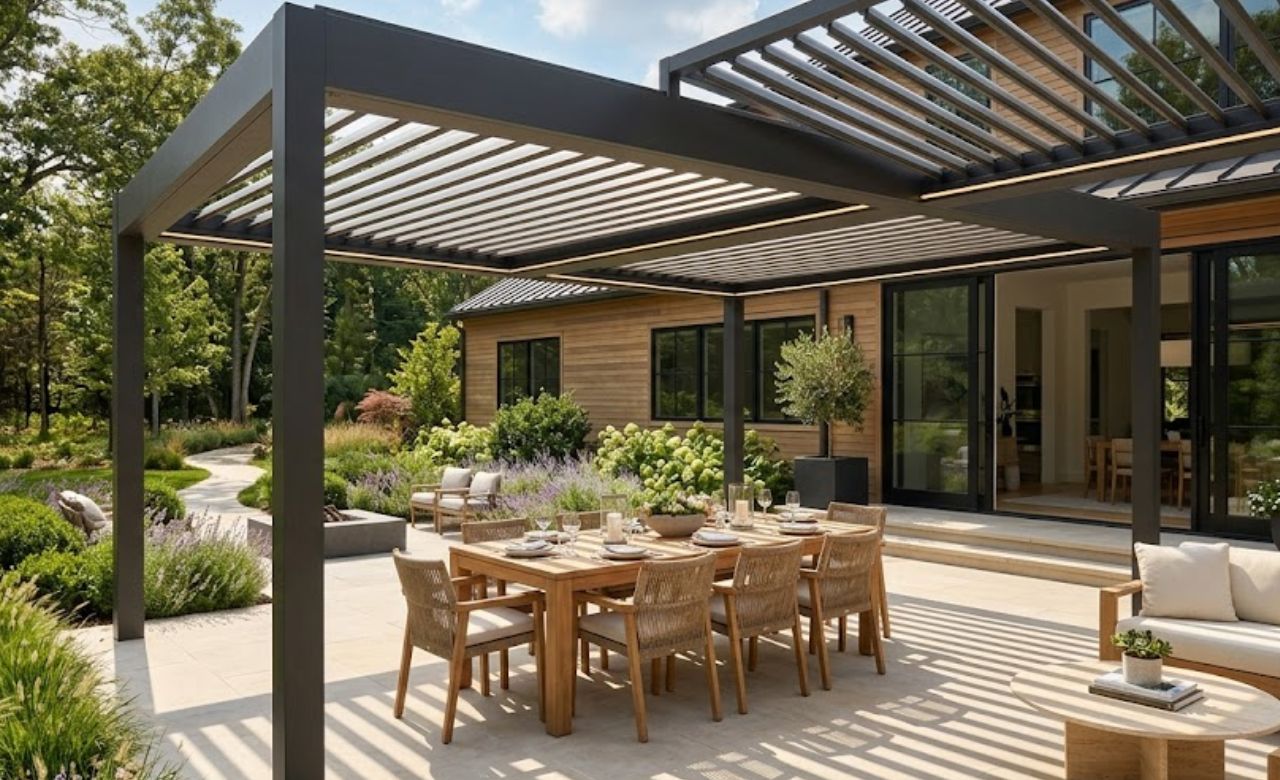
Motorized louvered roof panels are the most versatile covering for a small backyard pavilion because they adapt to any weather condition at any time of day. Open them fully on a perfect day and close them during a downpour or peak afternoon heat without moving from your seat.
Integrated drainage channels in each louver blade manage rain water when the roof is closed so the dining area stays dry without a separate gutter system. LED strip lighting built into the louver frame adds evening ambiance without any additional electrical work.
Louvered Roof Features Worth Knowing
- Motorized louvers adjustable from fully open to fully closed
- Integrated drainage channels in each louver blade
- LED strip lighting built into the louver frame
- Wind sensor for automatic closure in storm conditions
- Remote control or smartphone app operation
10. Pavilion With Vertical Garden Wall
Adding a vertical garden panel to one side of a small backyard pavilion brings greenery into the space without using any ground area for garden beds. Modular living wall systems, trellis panels with climbing plants, and wall-mounted planter pockets all achieve the same result at different price points.
Vertical greenery on the back wall of a pavilion creates depth and visual interest that makes a small space feel more immersive and less like a compact enclosed area. Fragrant plants like jasmine or lavender add a sensory layer that makes the dining experience genuinely more pleasant.
11. Pavilion With Gravel Base and Raised Planters
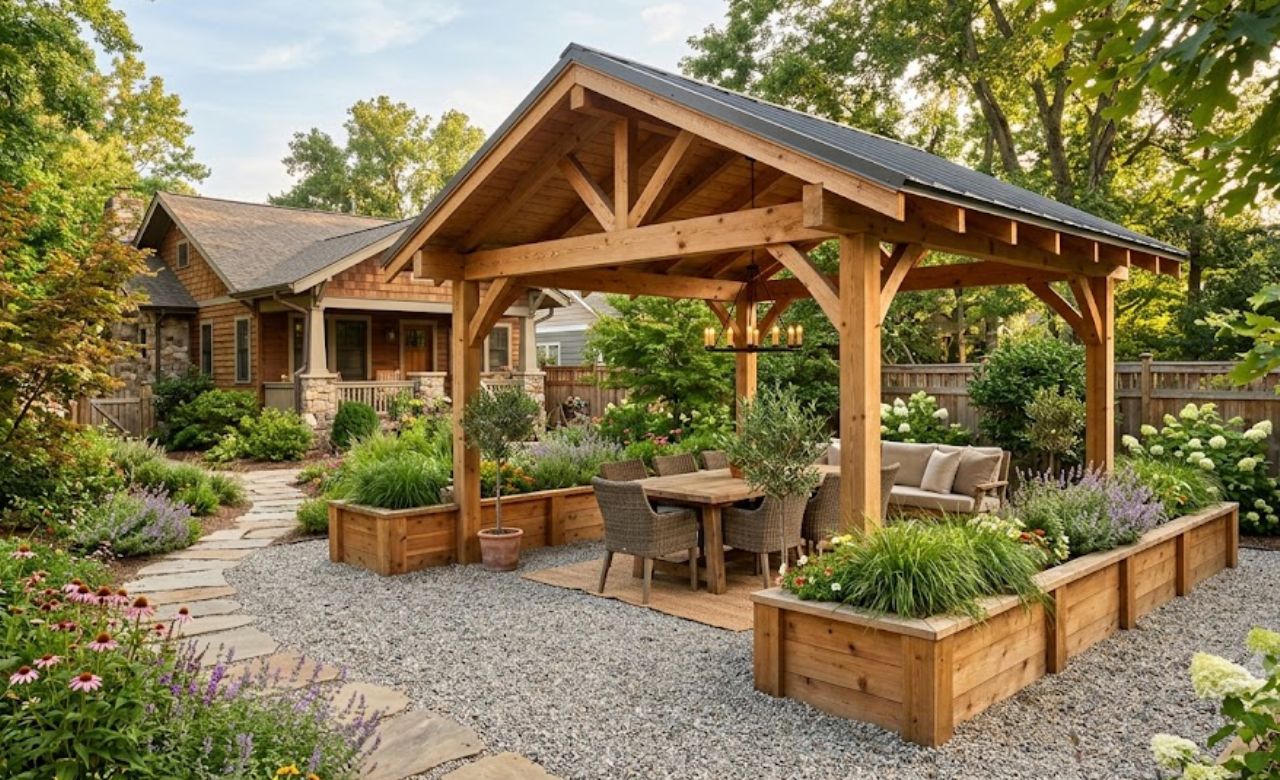
Gravel under a small pavilion drains freely, requires no mowing or maintenance, defines the footprint clearly, and costs less than paving or decking for the same area. Raised planters positioned at the perimeter corners add greenery and soften the edges of the structure without taking any usable floor space from the dining or seating area.
River pebble and crushed granite are the two most popular gravel choices. Both compact well under furniture legs and look clean and deliberate rather than rough or unfinished.
Gravel and Planter Combination Tips
- River pebble for a smooth rounded natural look
- Crushed granite for a finer more compacted surface
- Raised planters at corner posts to soften the structure edges
- Landscape fabric underneath gravel to prevent weed growth
12. Pavilion With Curtain Walls
Outdoor curtains hung from ceiling-mounted tracks on two or three sides of a small pavilion give you adjustable privacy and wind protection that no fixed wall can match. Pull them closed when the neighbor or the afternoon sun is the issue and open them fully when the yard should feel open and connected.
Solution-dyed acrylic and Sunbrella canvas are the two fabric types worth buying for permanent outdoor curtain installations. Both resist fading, moisture, and mold far better than standard indoor fabrics used outside.
Curtain Wall Options
- White or cream for an airy open feel during the day
- Navy or charcoal for bold contrast and strong privacy
- Sheer panels for filtered light and soft daytime screening
- Solid blackout outdoor fabric for full privacy and shade
- Layered sheer over solid for day and night flexibility
Install your pavilion lighting on a dimmer switch. Bright light for dining and a low warm glow for relaxing after the meal makes the same space feel completely different without any additional hardware.
13. Japanese-Inspired Minimalist Pavilion
Clean horizontal lines, dark timber or black powder-coated steel, and deliberate negative space are the defining characteristics of a Japanese-inspired pavilion design. This approach suits modern landscape design and brings a calm and considered aesthetic to the outdoor dining and seating space.
Pair with raked gravel, large format stone pavers, and restrained planting in green and white tones. The overall effect is a dining area that feels peaceful and intentional rather than busy or over-decorated.
14. Pavilion With Integrated Lighting and Fans
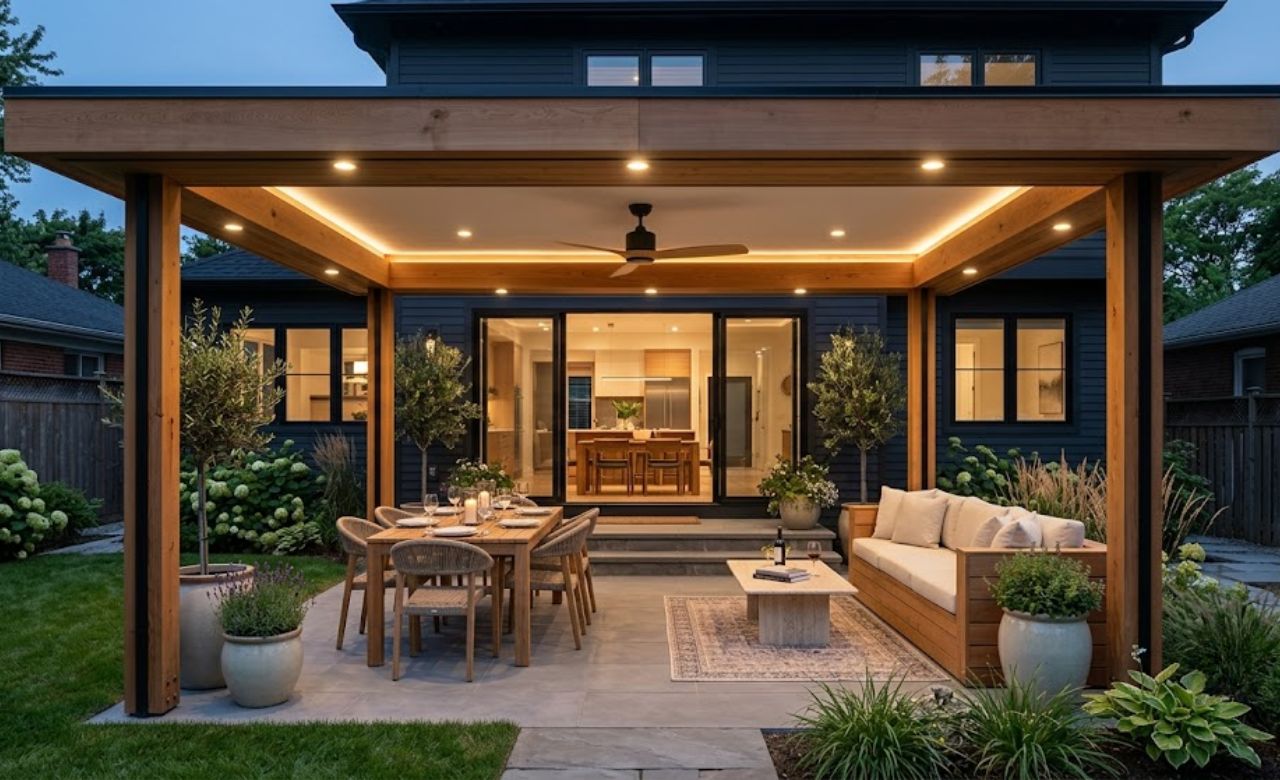
Integrated lighting and ceiling fans built into the pavilion frame rather than added as afterthoughts change how the structure looks and functions after dark and during hot weather completely. Recessed downlights in the overhead beams, LED strip lights along the inside of the roof frame, and a centrally mounted ceiling fan create a finished and deliberately designed outdoor room.
Good lighting makes a small outdoor pavilion usable for more hours of the day across more months of the year. A well-lit, well-ventilated pavilion used year-round delivers far more return than a larger structure that only gets used on warm calm afternoons.
Integrated Feature Options
- Recessed downlights in the overhead beam faces
- LED strip lighting along the inside of the roof frame
- Ceiling fan rated for outdoor damp or wet locations
15. Pavilion With Projector Screen for Outdoor Cinema
A retractable projector screen installed at one end of a backyard pavilion transforms the outdoor dining space into an open-air cinema after the meal is finished. This works particularly well in small yards where there is no room for a separate entertainment area because the pavilion handles both dining and movie viewing in the same footprint.
Pair with a weatherproof projector mounted to the overhead beam and a Bluetooth outdoor speaker system for a complete setup that takes up no additional space in the yard.
Outdoor Cinema Pavilion Setup Details
- Retractable projector screen for a clean daytime appearance
- Weatherproof projector mounted to the overhead beam
- Bluetooth outdoor speaker system for wireless audio
- Blackout curtains on three sides for daytime viewing capability
16. Pavilion With Water Feature Integration
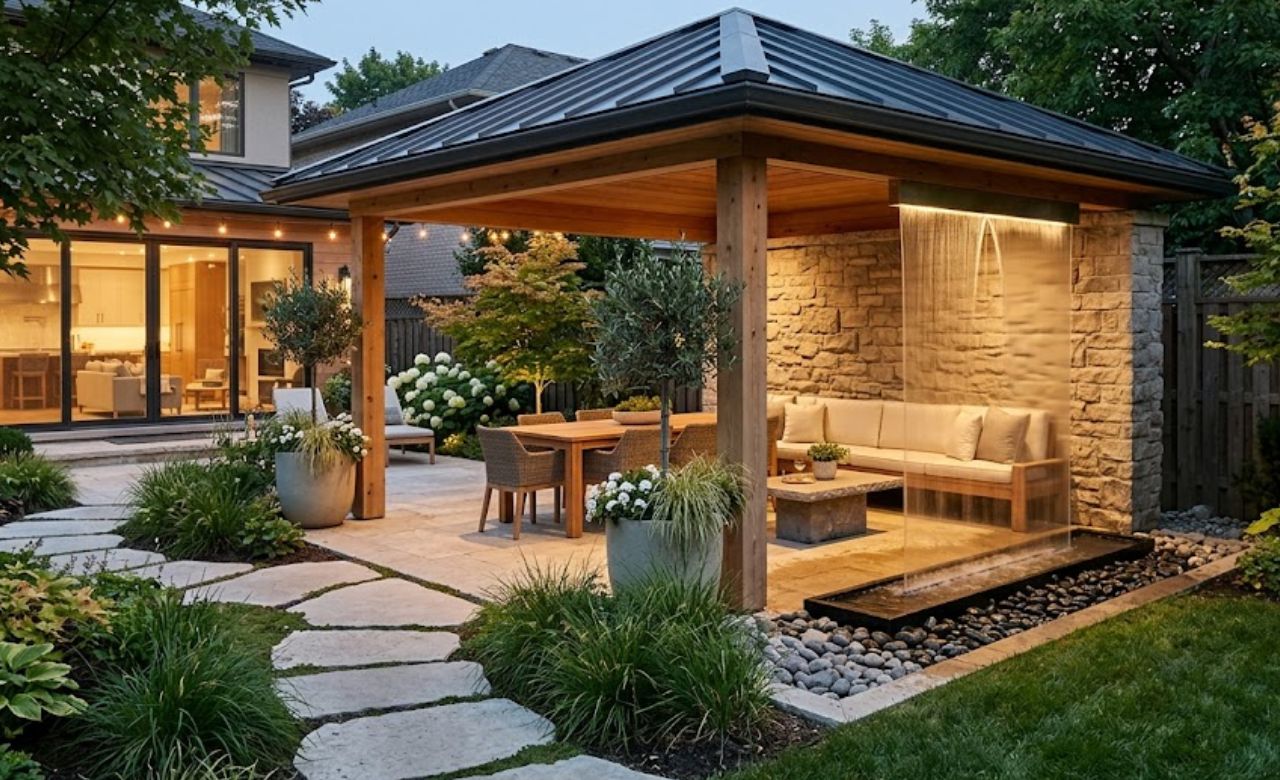
Positioning a small water feature beside or integrated into the pavilion structure adds sound, movement, and a sensory quality to the outdoor dining space that no other decorating element delivers. Moving water masks neighbor noise and creates a sense of calm that makes a small backyard feel significantly more private and immersive.
Wall-mounted water features on the back fence behind the pavilion are the most space-efficient approach. Water cascading down a stone or rendered wall into a narrow trough takes up almost no floor space and provides constant background sound throughout dining and relaxing hours.
Water Feature Options for a Small Pavilion
- Wall-mounted cascade for maximum space efficiency
- Small self-contained bowl fountain for a low-cost option
- Narrow channel water feature along the pavilion edge
- Millstone or rock fountain for a natural garden look
- Raised pond with water plants for a more elaborate installation
17. Pavilion With Mixed Material Design
Combining two or three materials in a single pavilion design creates a result that looks more considered and architecturally interesting than a structure built from one material alone. Timber posts with a steel roof frame, concrete bases with hardwood beams, or bamboo screens with a powder-coated aluminum structure all create a layered quality that single-material builds rarely achieve.
Mixed material pavilions also allow you to choose the best performing material for each element independently. Steel where structural span matters, timber where warmth and character are the priority, and polycarbonate or shade sails where light transmission is needed most.
Mixed Material Combinations That Work Well
- Timber posts with powder-coated steel roof frame
- Concrete base with hardwood beam and slatted timber roof
- Bamboo screening with aluminum frame and polycarbonate roof
- Stone half wall base with timber posts and open beam roof
Before setting any posts choose a round dining table over a rectangular one for a small pavilion. Round tables seat the same number of people in significantly less floor space and allow easier movement around the structure.
Making the Most of a Small Backyard Pavilion
Simply Backyard believes that small backyard pavilions work best when the structure, furniture, and surrounding landscape are all scaled to complement one another. Oversized furniture in a compact pavilion can make the entire space feel cramped, while appropriately sized pieces create a layout that feels open, balanced, and comfortable.
Every idea on this list has been selected because it embraces limited space instead of fighting against it. From a simple four-post flat-roof design to a mixed-material pavilion with integrated lighting and water features, there is a practical and achievable option for every small backyard, style, and budget.
Frequently Asked Questions
1. What is the best pavilion size for a small backyard?
10×10 feet is the most practical size for a small backyard. It fits a dining table and four to six chairs comfortably without dominating the surrounding yard space.
2. Do I need a permit to build a backyard pavilion?
Permit requirements depend on your location and the size and permanence of the structure. Always check with your local council or building authority before starting any permanent build.
3. What is the most low-maintenance pavilion material?
Powder-coated aluminum frame with a polycarbonate or shade sail roof requires the least ongoing maintenance of any pavilion type and handles all weather conditions without annual treatment or repainting.
4. Can I build a backyard pavilion myself?
Yes for most basic designs. Four-post flat roof pavilions and attached lean-to structures are the most beginner-friendly builds. Louvered roof systems and mixed material designs are better suited to professional installation.